
Solitaire games
Clear the table with one deck of cards or several.
The games are grouped by family. The games in a family share a deal and most of their rules, so one you know is an easy way into the rest.
Klondike
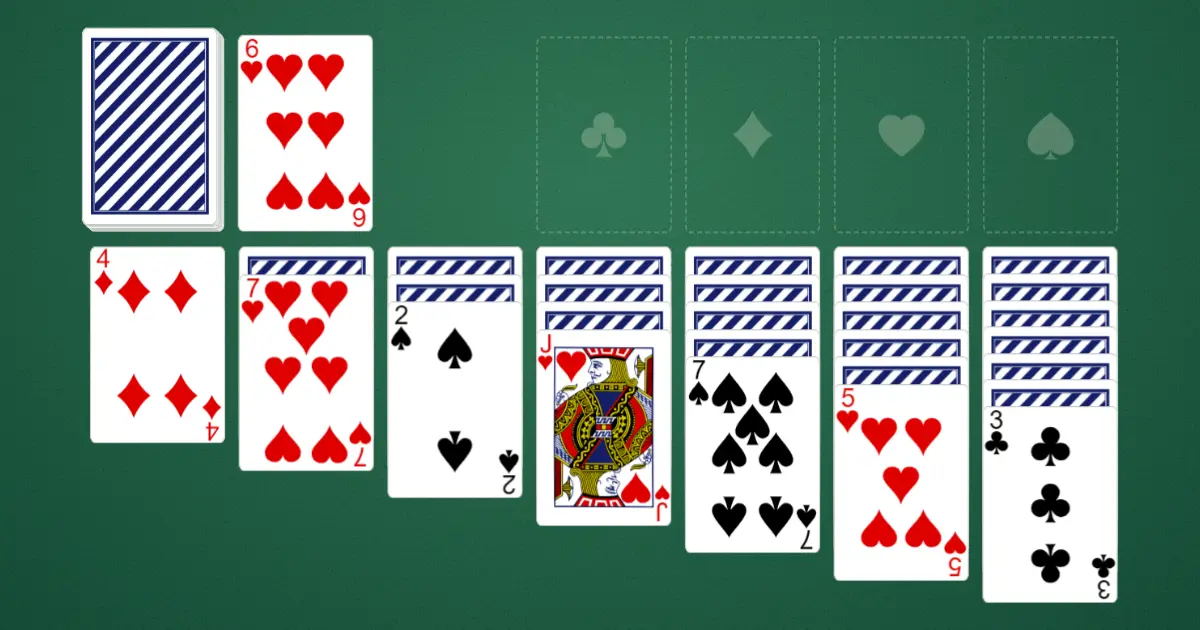
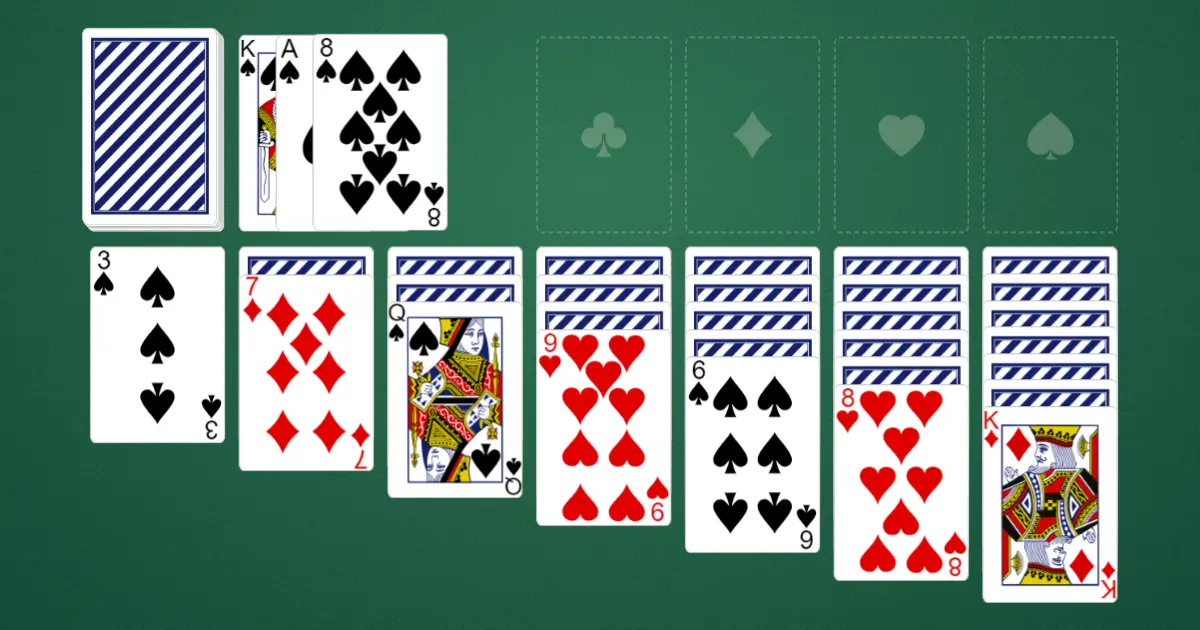
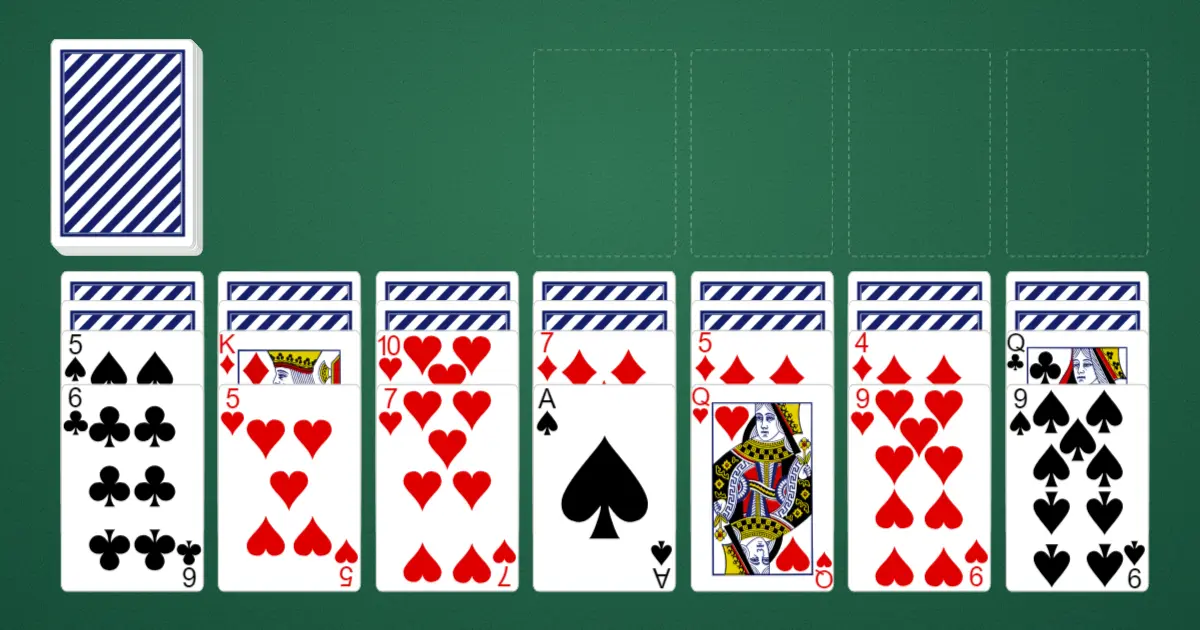
Klondike is the solitaire most people know: seven piles with most of their cards face down, and a stock turned one card at a time, or three at a time in Draw Three. Las Vegas Solitaire plays the same deal for a dollar balance with one pass through the stock, and Las Vegas Solitaire Turn 3 turns three cards at a time with three passes.
-
Klondike
Turn one card at a time from the stock.
-
Draw Three
Turn three at a time, and only the top one is in play.
-
Las Vegas Solitaire
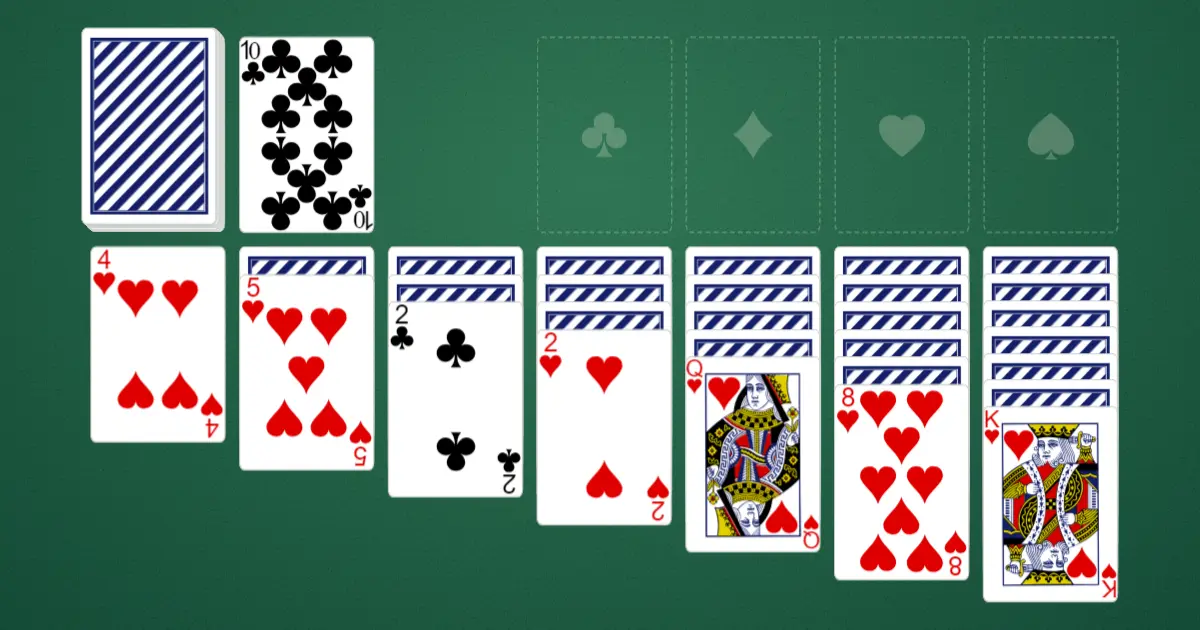
Klondike played for a dollar balance: the deal costs $52, each card on a foundation pays $5, and the stock is turned once, one card at a time.
-
Las Vegas Solitaire Turn 3
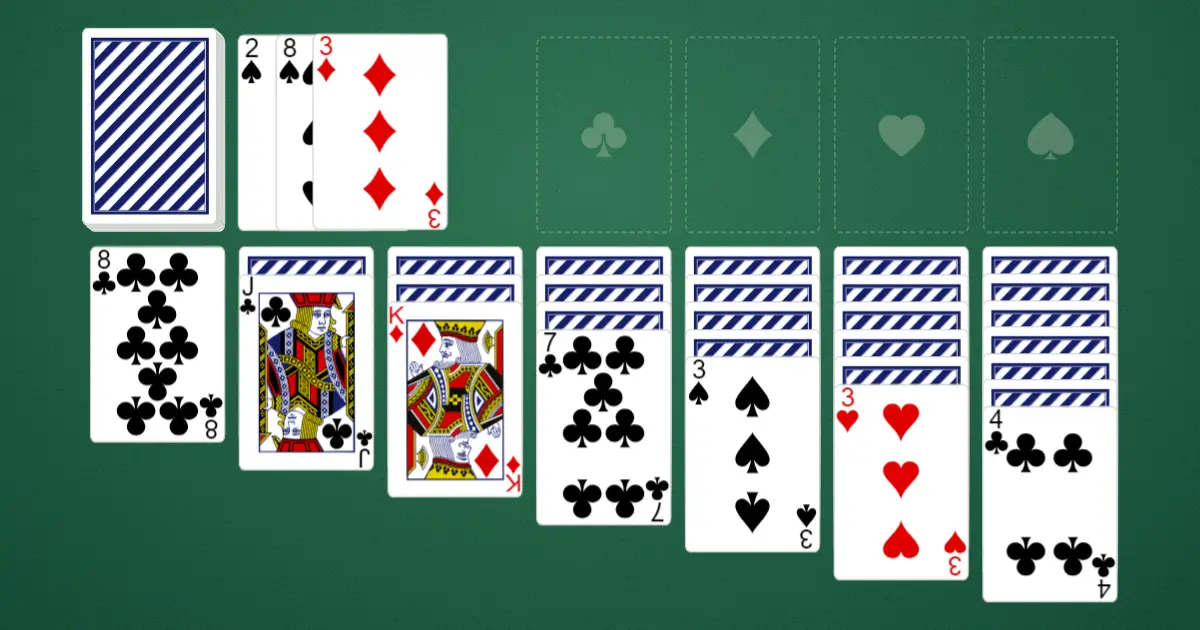
Las Vegas Solitaire with the stock turned three cards at a time and three passes through it.
Pyramid
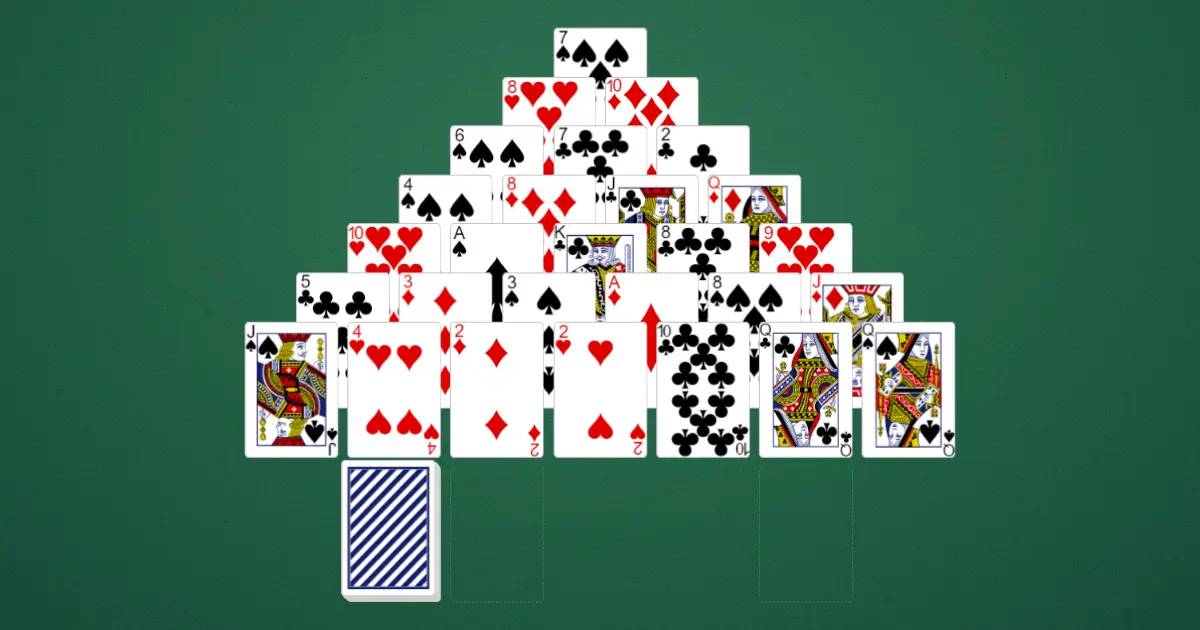
Pyramid clears a pyramid of 28 cards by pairing cards that add up to thirteen.
Calculation
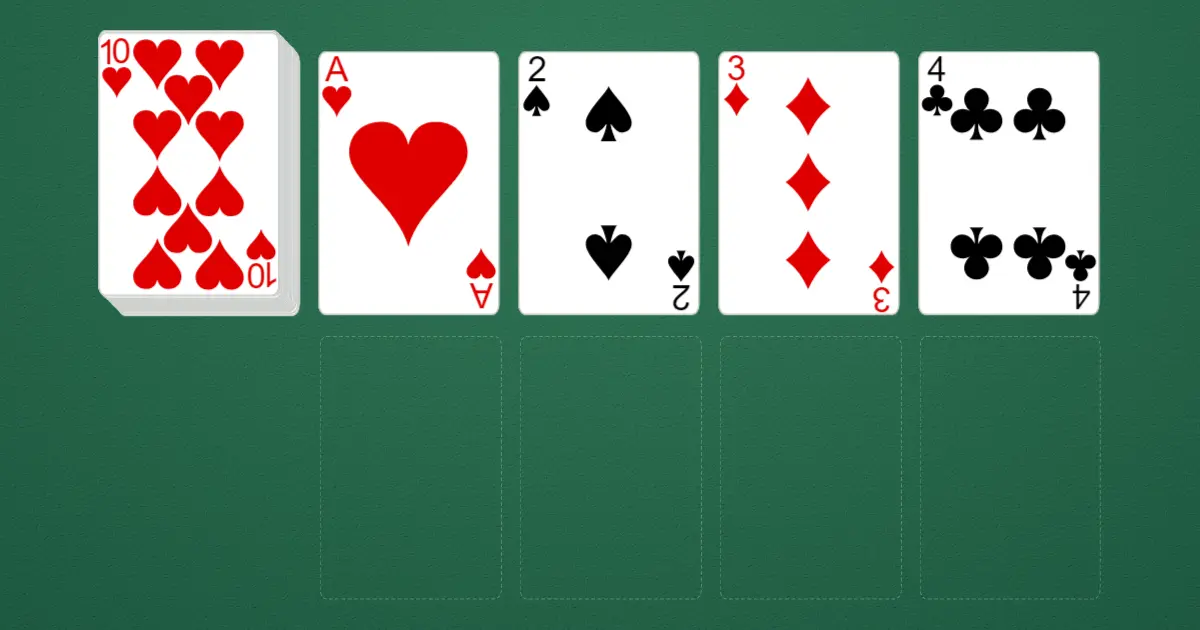
Calculation builds its four foundations by ones, twos, threes and fours with only the next card of the stock showing. Sir Tommy is played the same way, but every foundation climbs from Ace to King.
-
Calculation
Build four foundations by ones, twos, threes and fours, any suit.
-
Sir Tommy
Build four foundations from Ace to King, any suit.
Aces Up
Aces Up has you discard every card but the aces.
Aces and Kings
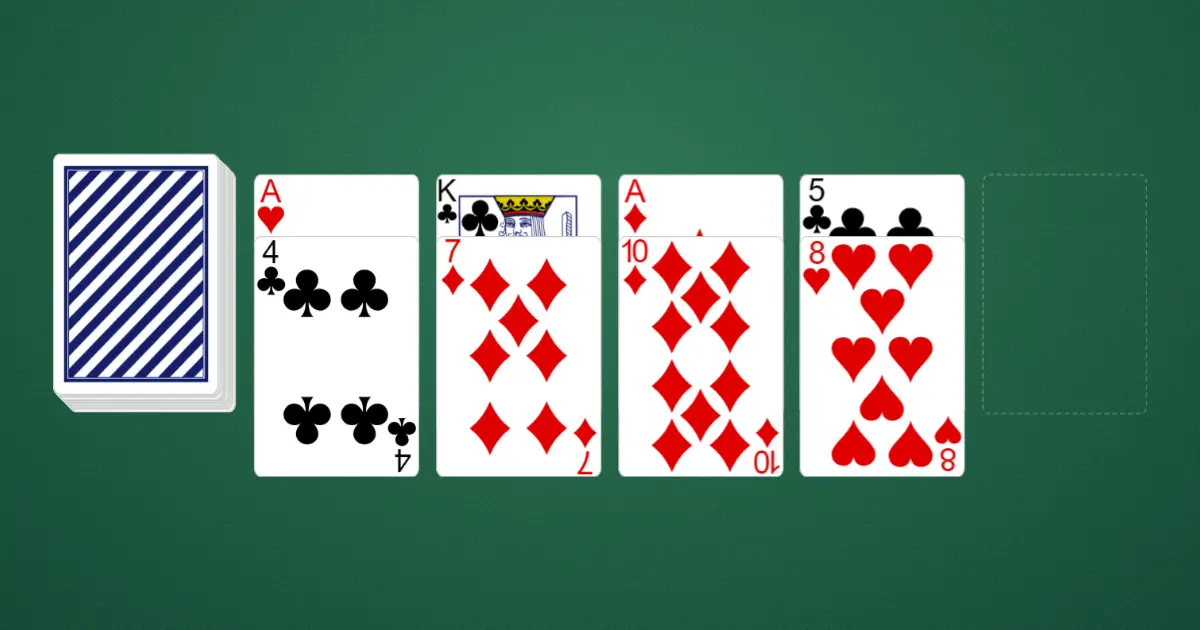
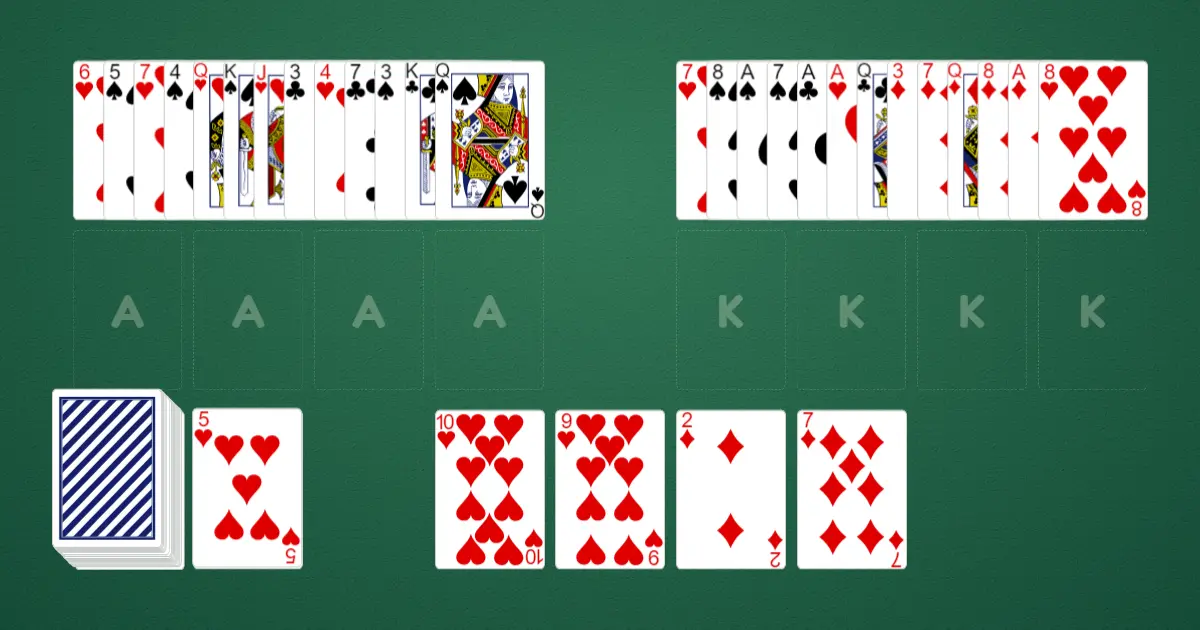
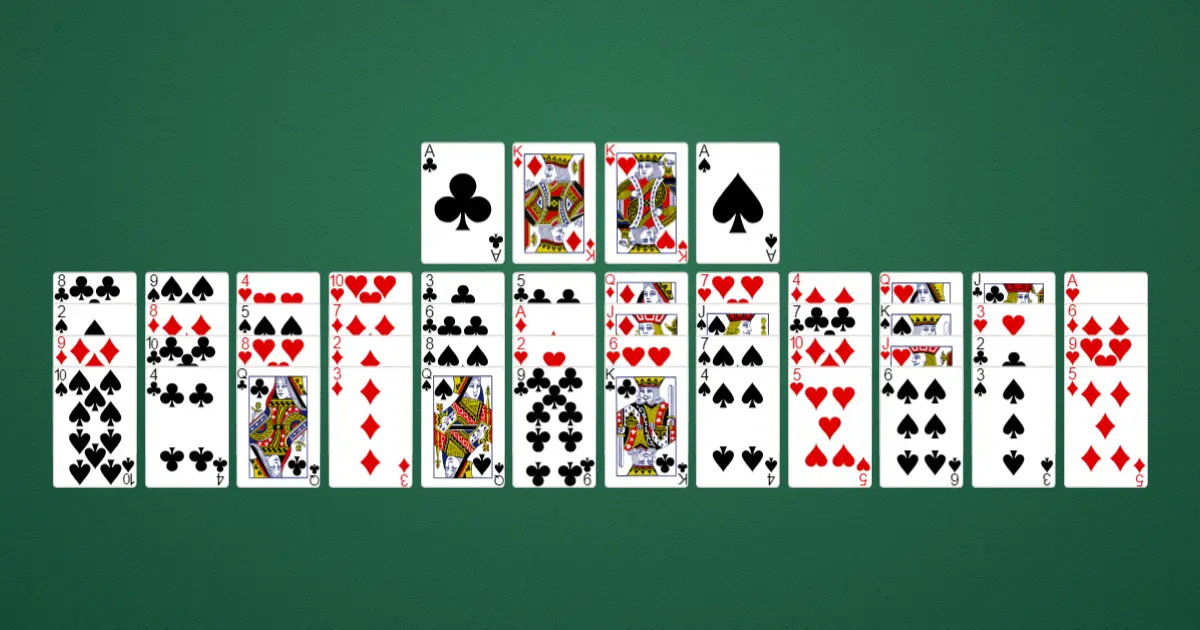
Aces and Kings plays two decks onto eight foundations, four built up from the Aces and four built down from the Kings, regardless of suit.
FreeCell
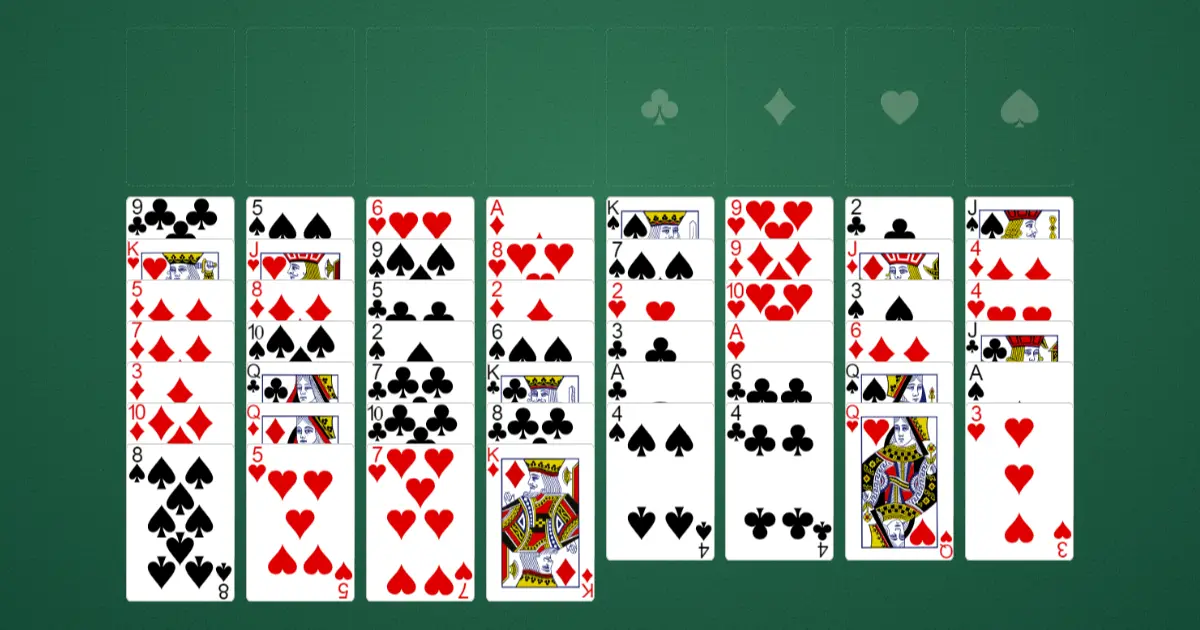
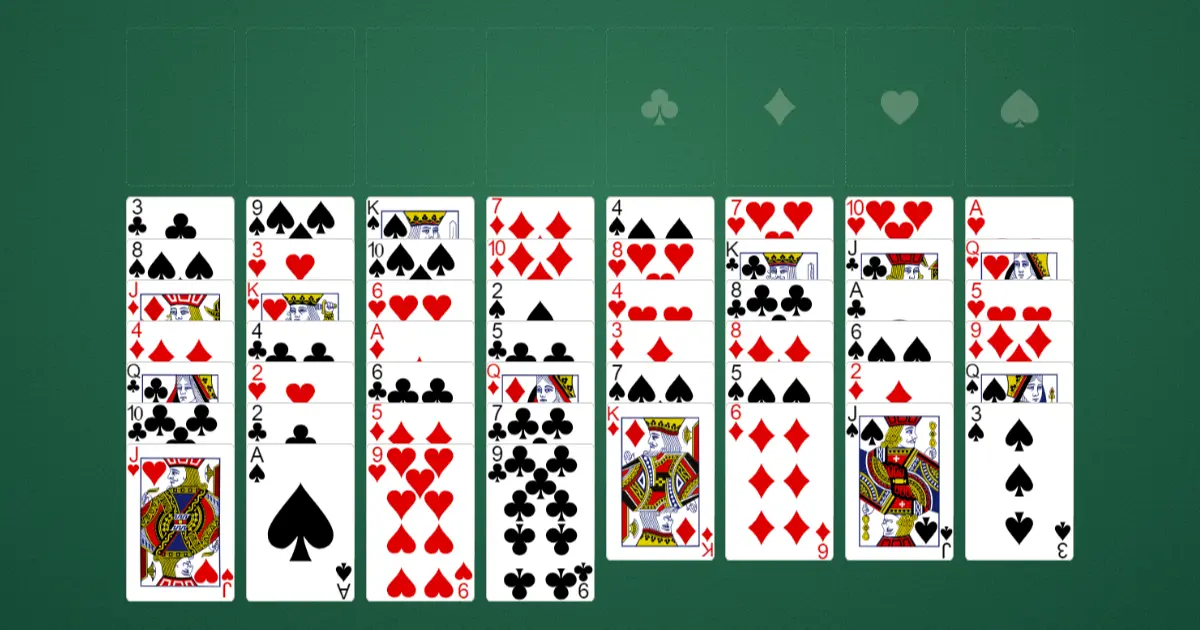
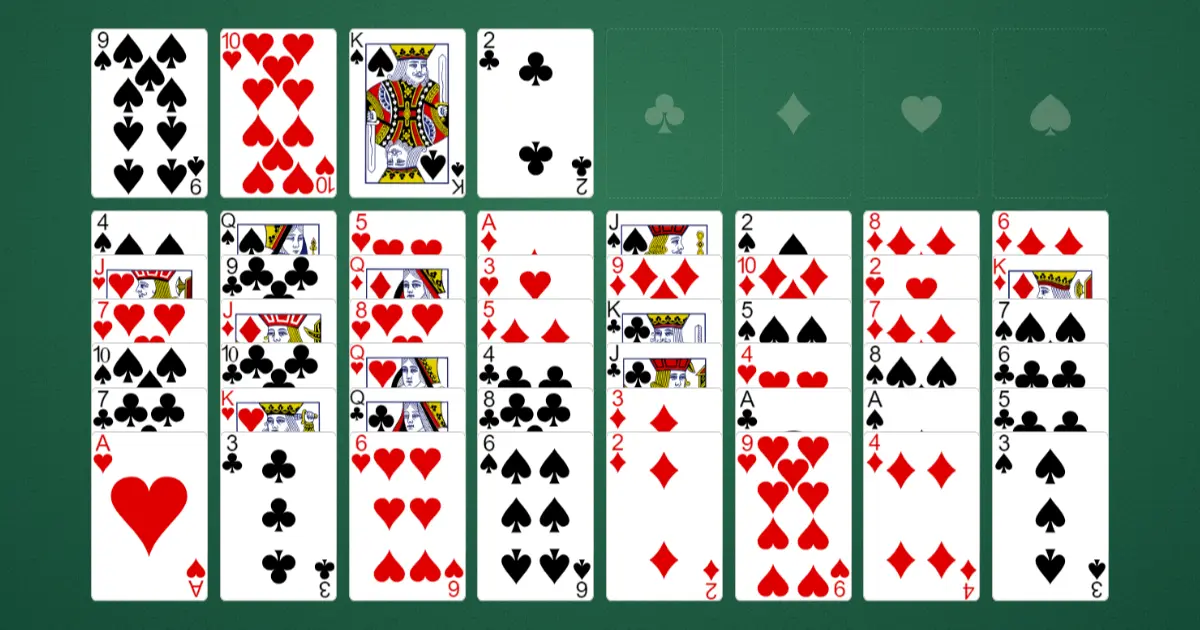
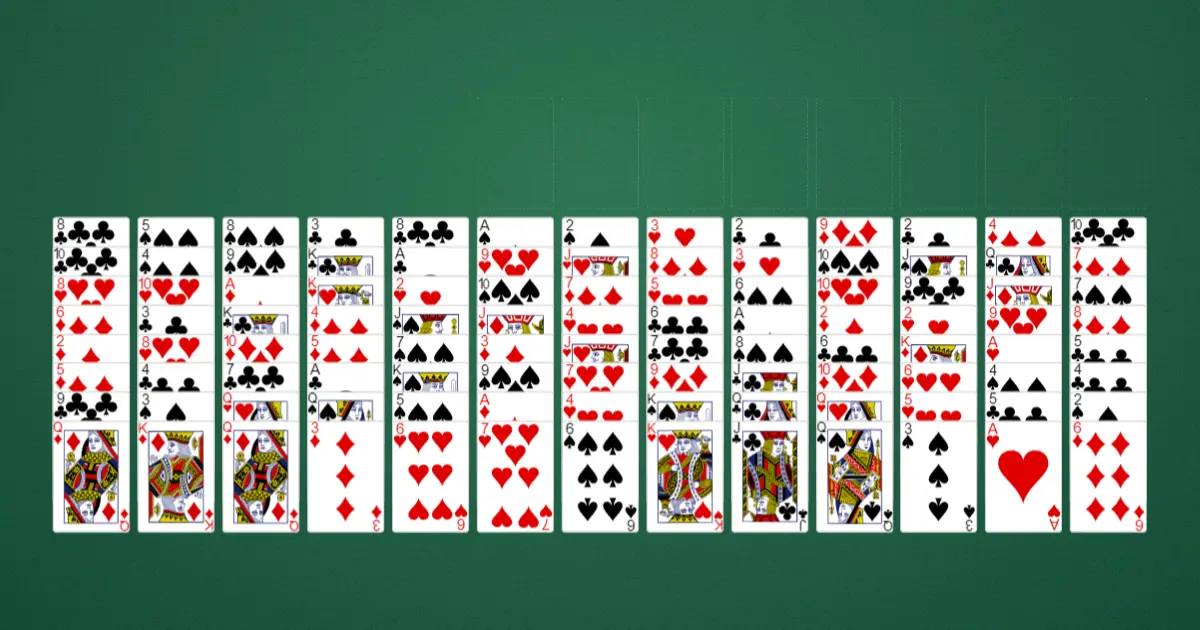
FreeCell deals every card face up, with four free cells to park cards in. Baker's Game is its older form built down by suit and ForeCell starts with the free cells full, while Beleaguered Castle, Fortress, Baker's Dozen and Bisley show every card with no free cells at all.
-
FreeCell
Build eight open columns down in alternating colours, with four free cells to park cards.
-
Baker's Game
FreeCell's ancestor, with columns built down by suit.
-
ForeCell
FreeCell with the four free cells dealt full, and only a King to fill an empty column.
-
Seahaven Towers
Ten columns built down by suit, with two cards dealt into the four free cells and only a King to fill an empty column.
-
Eight Off
Eight columns built down by suit, with eight free cells, four of them dealt full, and only a King to fill an empty column.
-
King Albert
Nine columns built down in alternating colours, with a reserve of seven cards to play from.
-
Beleaguered Castle
The Aces start on the foundations, and eight rows build down in any suit.
-
Streets and Alleys
Beleaguered Castle with the Aces shuffled into the deal.
-
Stronghold
Streets and Alleys with one free cell to park a card.
-
Citadel
Beleaguered Castle where a card that fits its foundation as it is dealt goes straight there.
-
Fortress
Ten rows that build up or down in suit, one card at a time.
-
Bastion
Ten columns that build up or down in suit, with the last two cards dealt into two free cells.
-
Baker's Dozen
Thirteen columns with every King dealt to the bottom, and no way to fill an empty column.
-
Spanish Patience
Baker's Dozen where any card can fill an empty column.
-
Good Measure
Baker's Dozen on ten columns of five, with two Aces already on the foundations.
-
Bisley
The Aces start on the foundations, the Kings build down to meet them, and columns build up or down in suit.
-
The Fan
Eighteen fans built down by suit, with only a King to fill an empty fan.
-
Shamrocks
Eighteen fans of up to three cards, built up or down in any suit.
-
Clover Leaf
Sixteen fans built up or down in suit, with clubs and spades going home from the Ace and hearts and diamonds from the King.
-
Alexander the Great
Clover Leaf dealt into twelve fans of four.
-
Grandfather's Clock
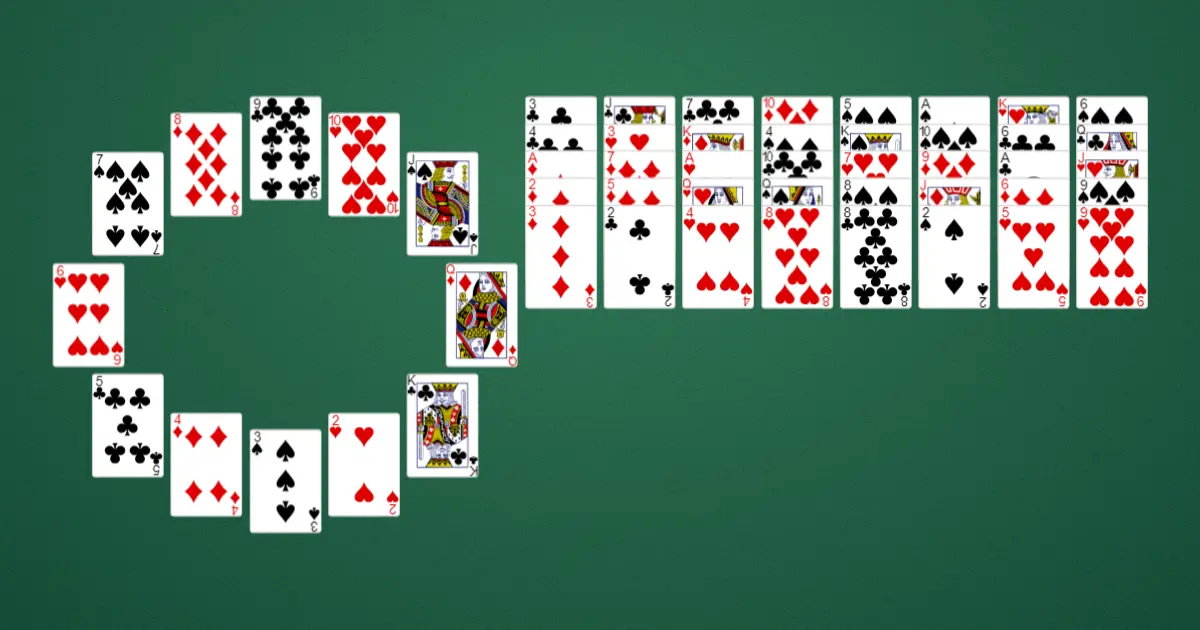
Twelve foundations stand round a clock face and build up by suit to their hours, from eight columns built down in any suit.
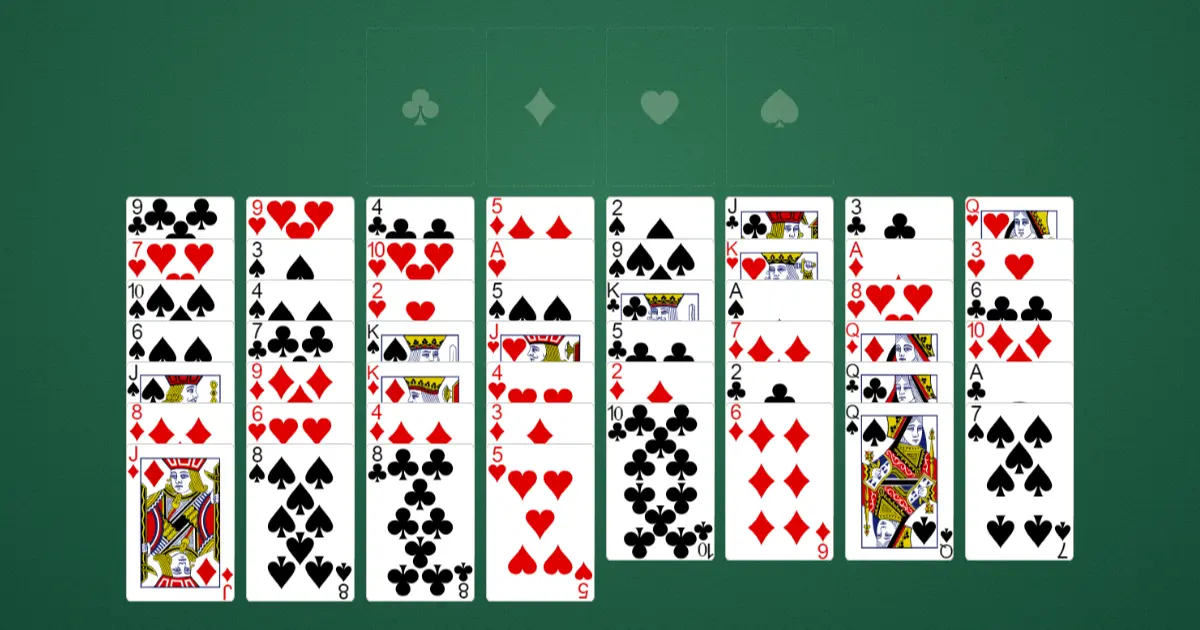
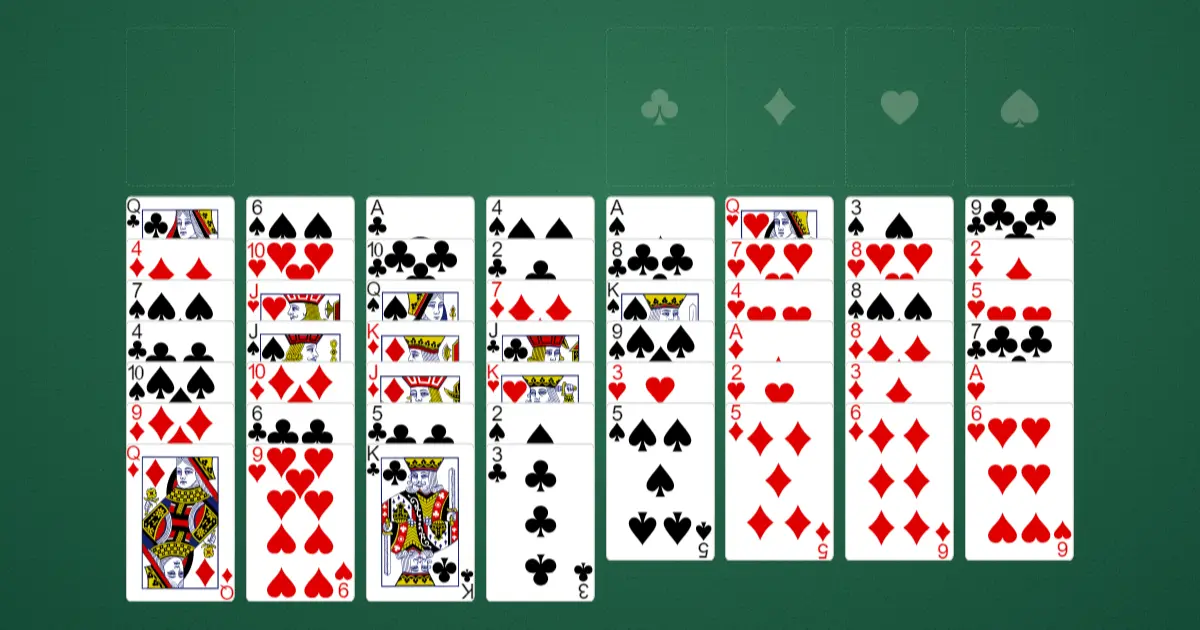
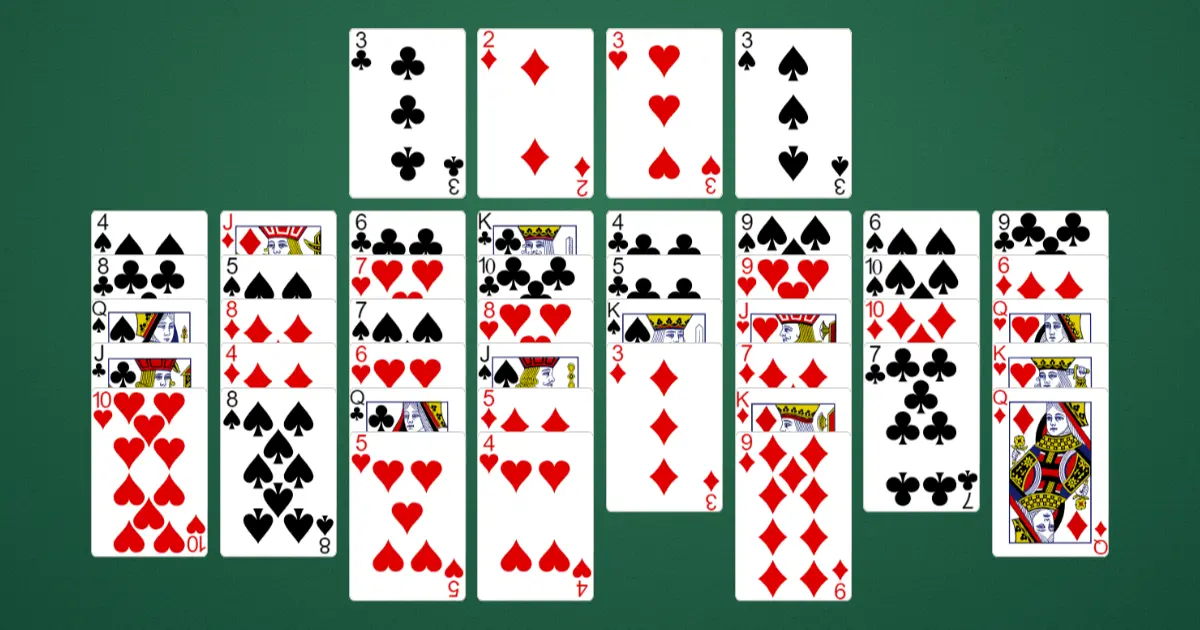
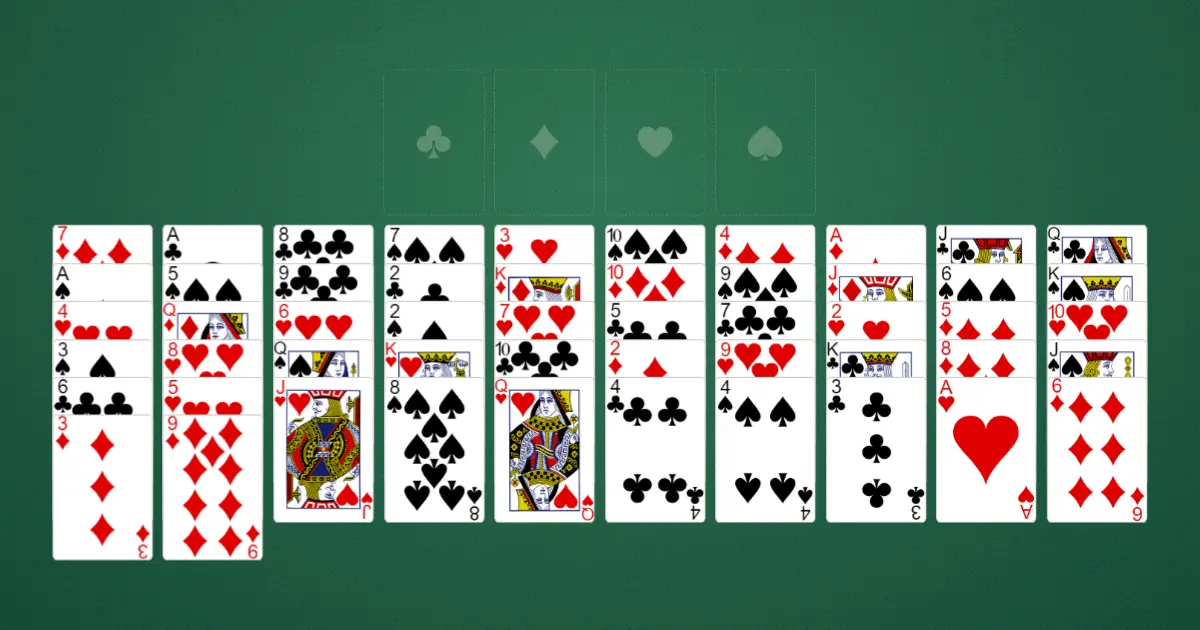
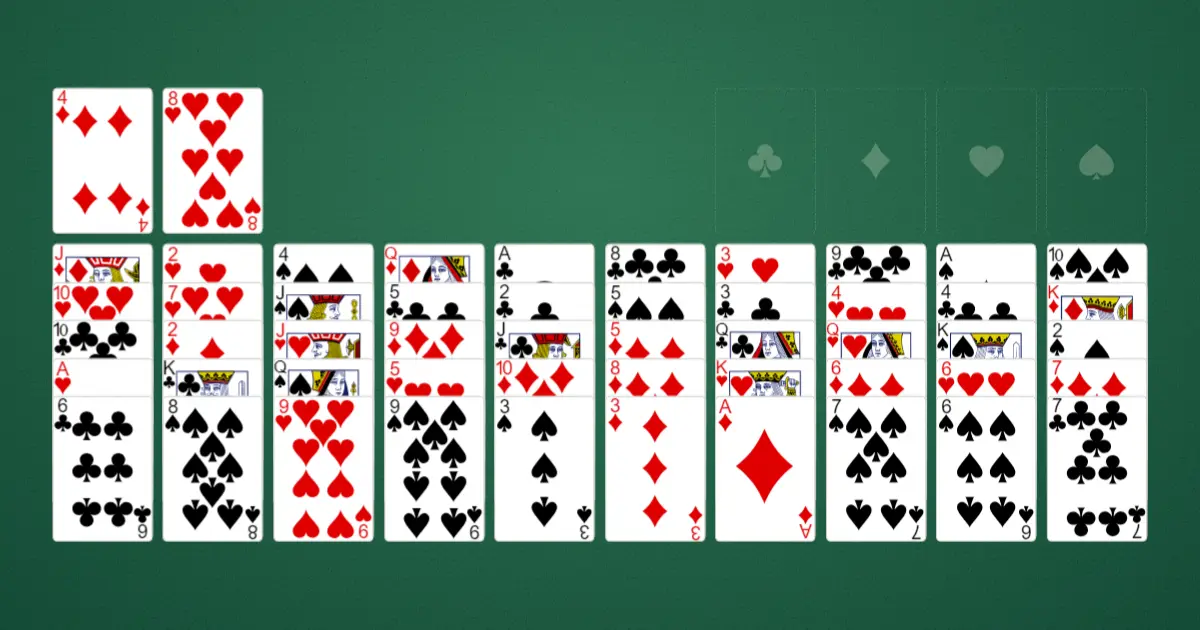
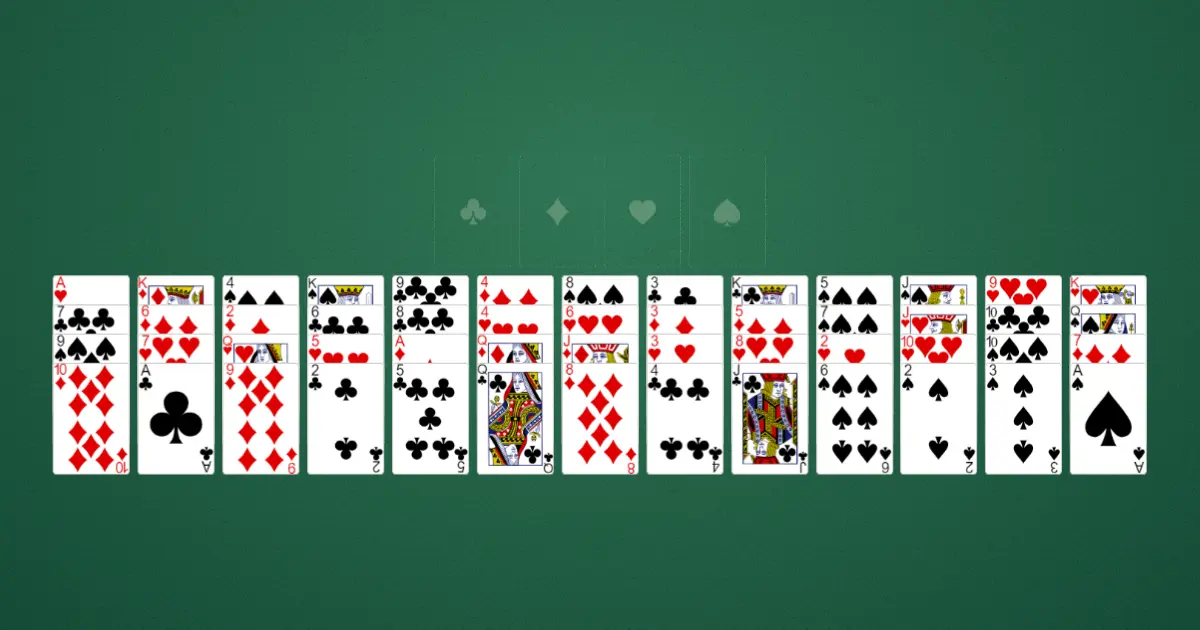
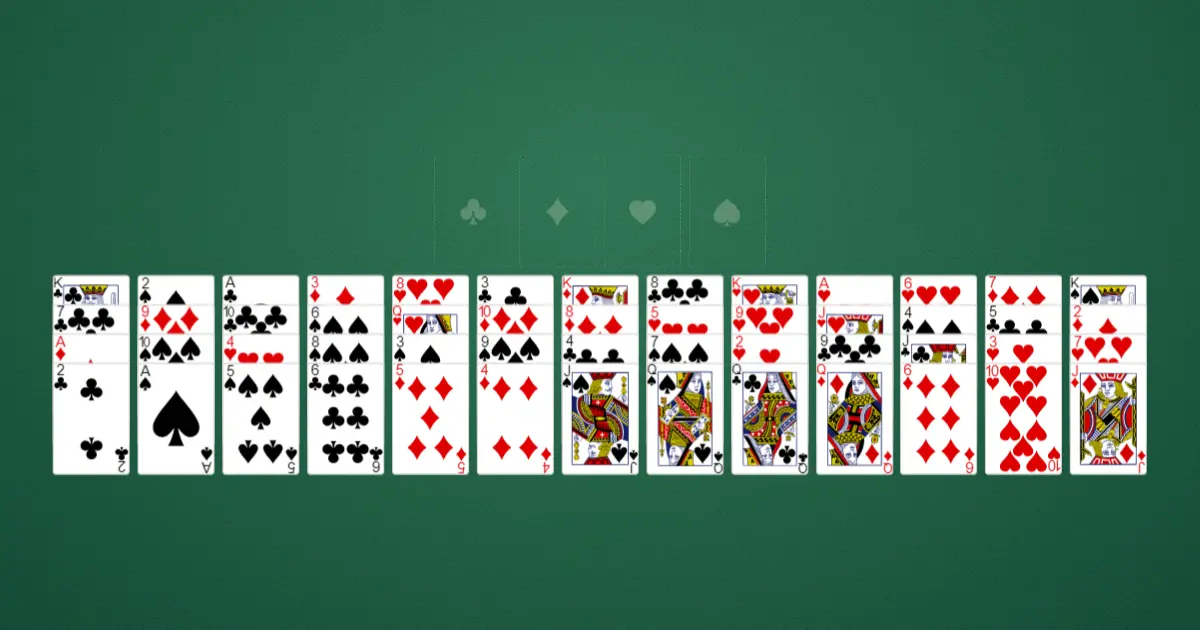
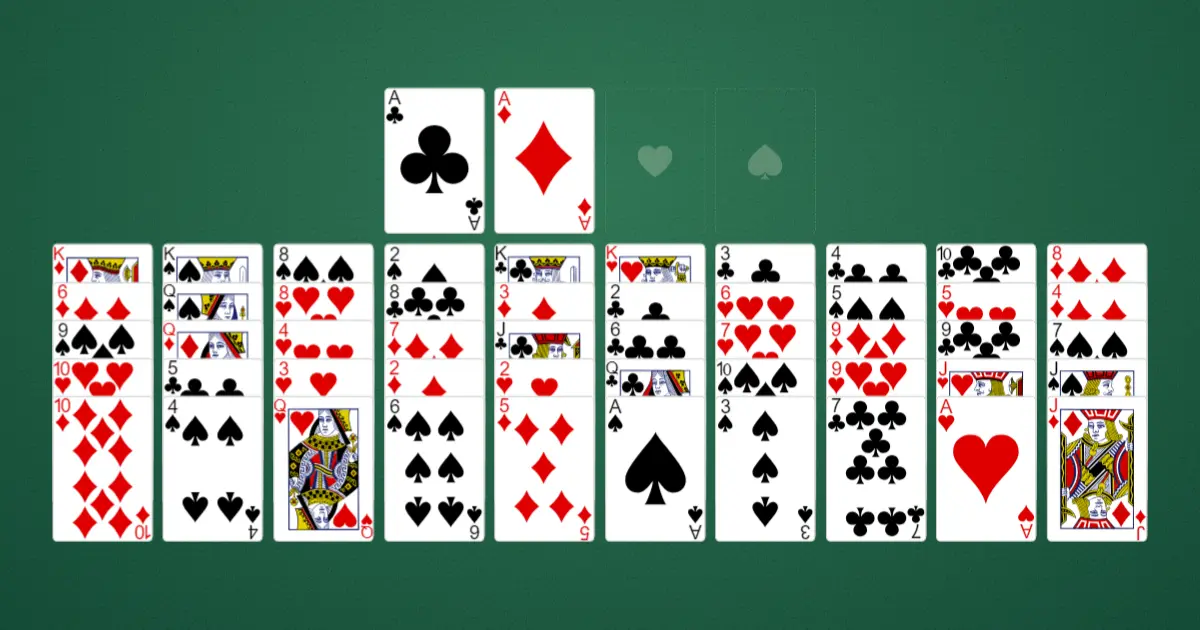
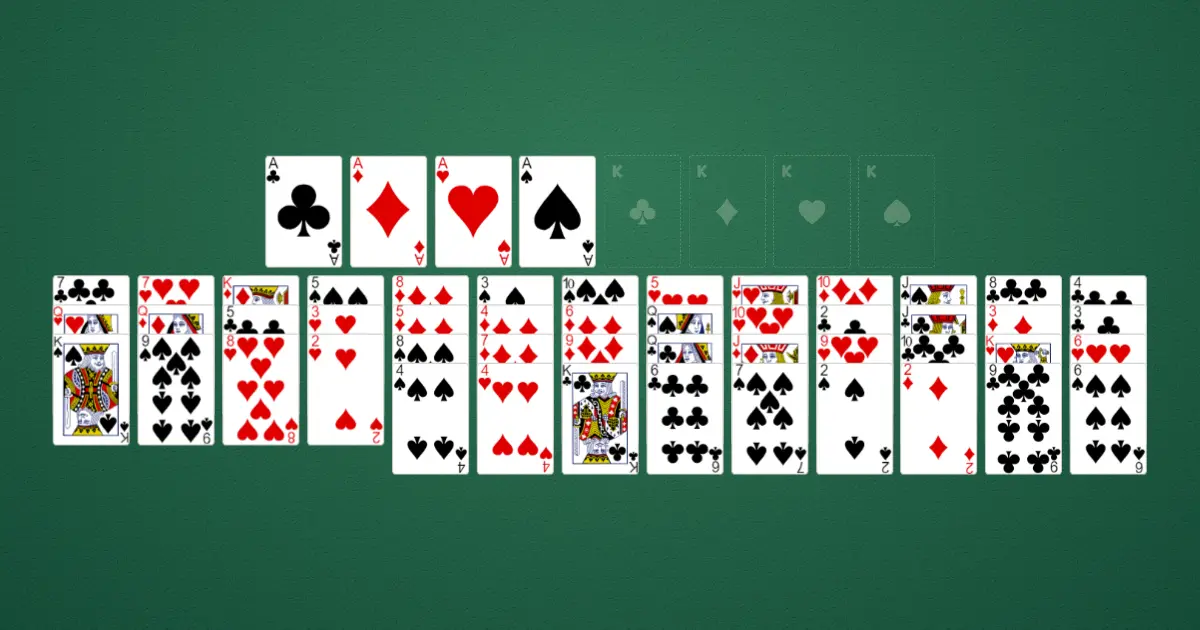
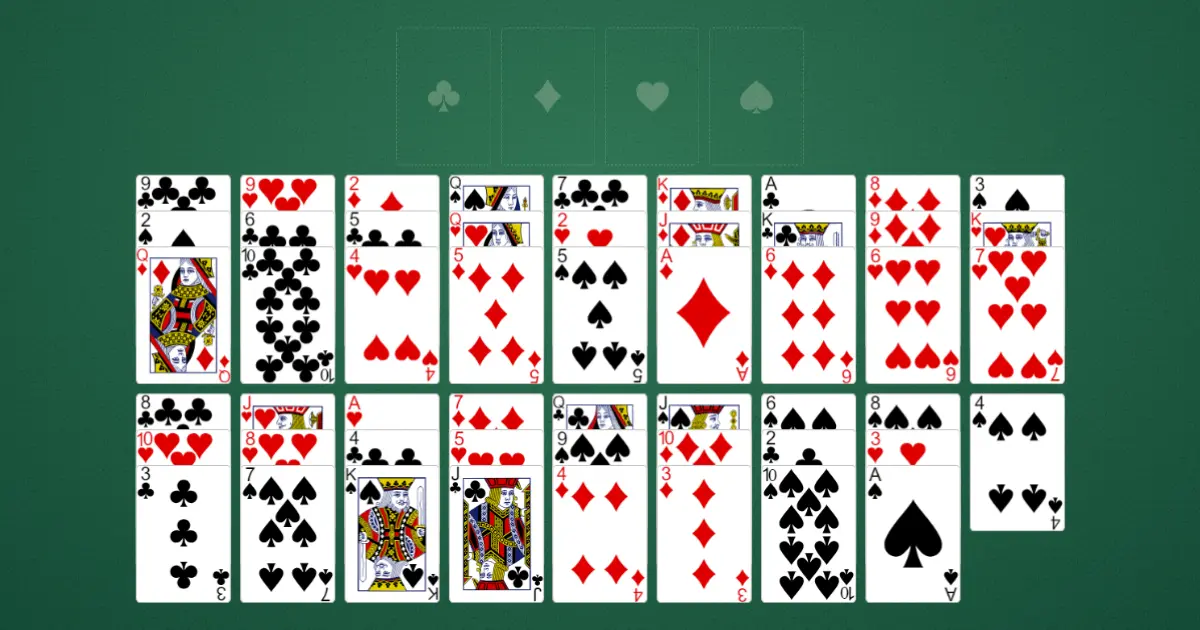
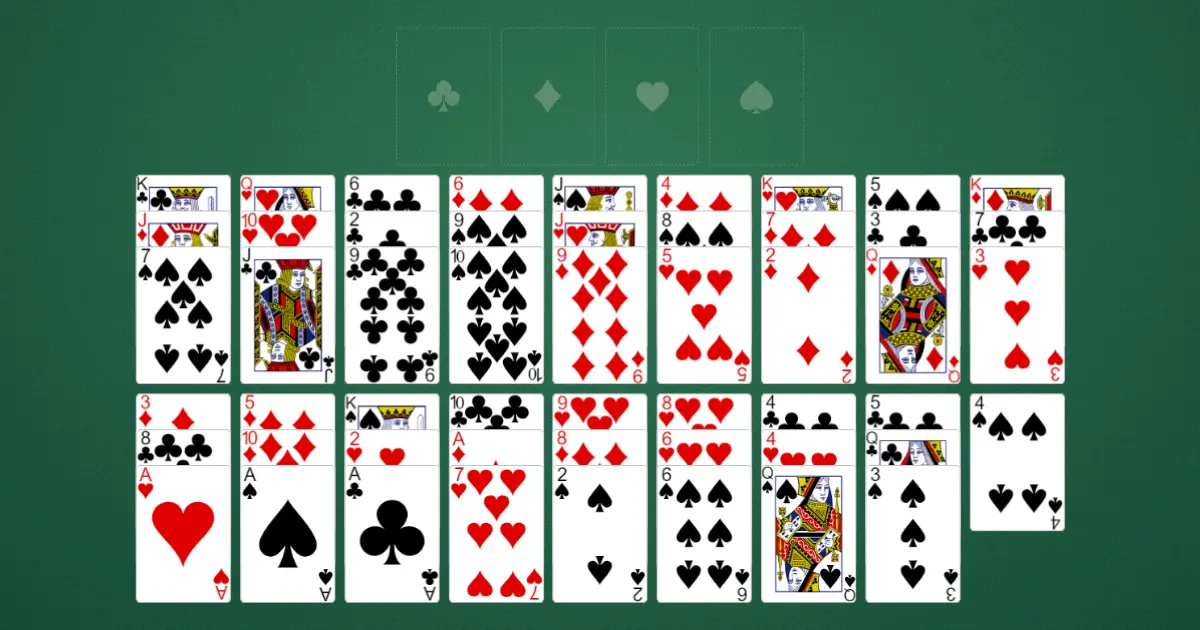
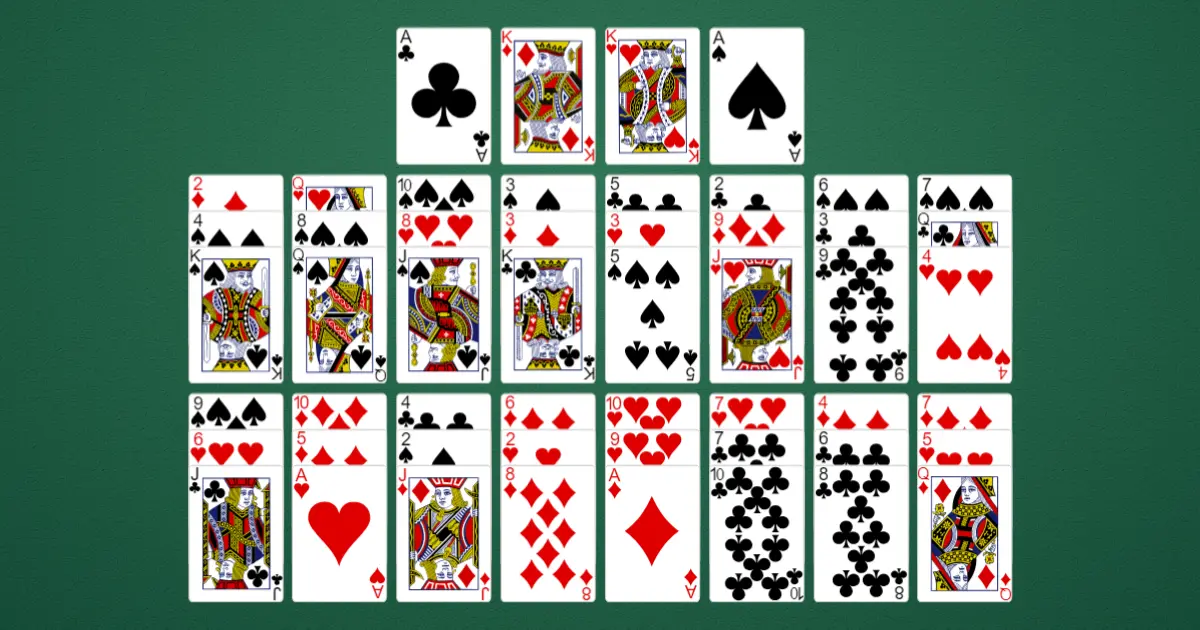
Canfield
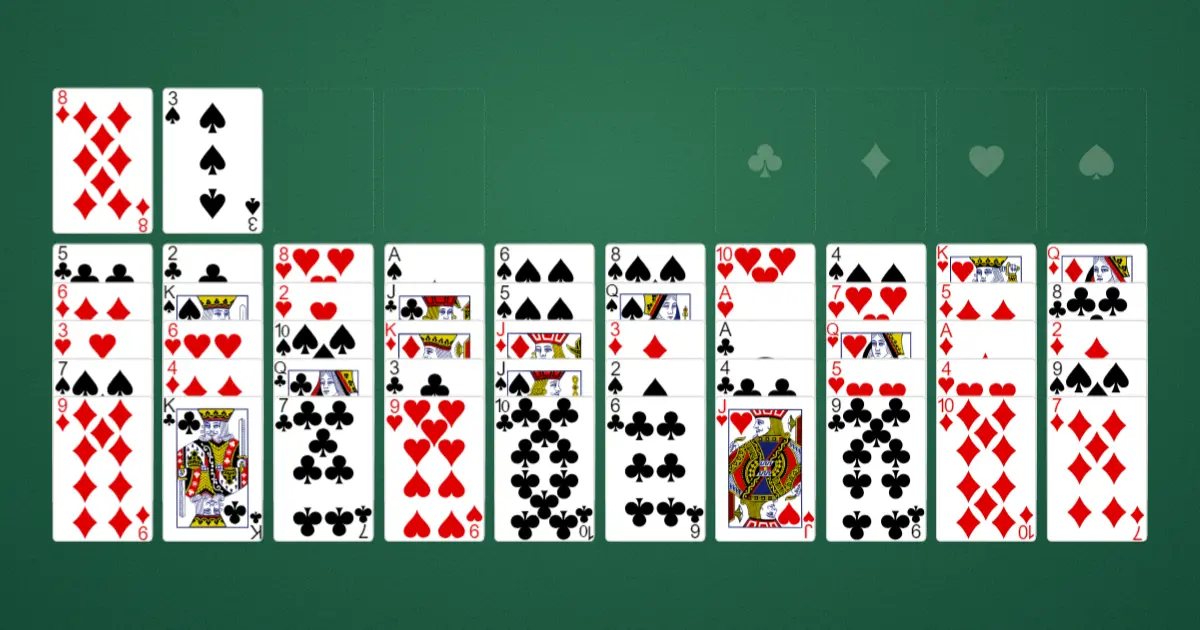
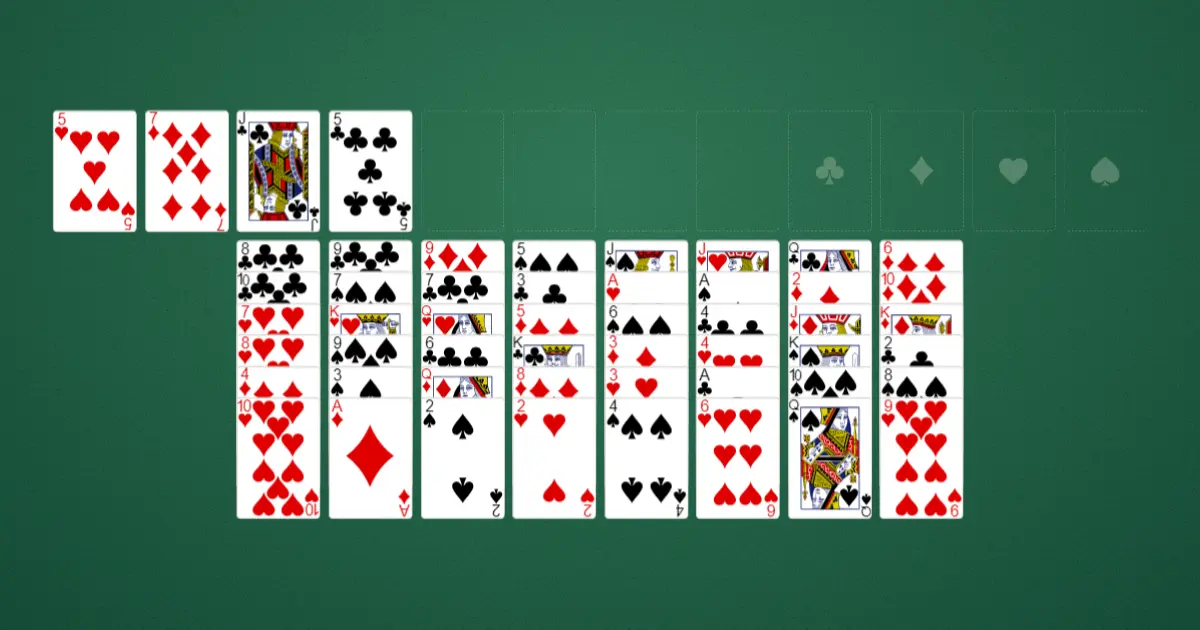
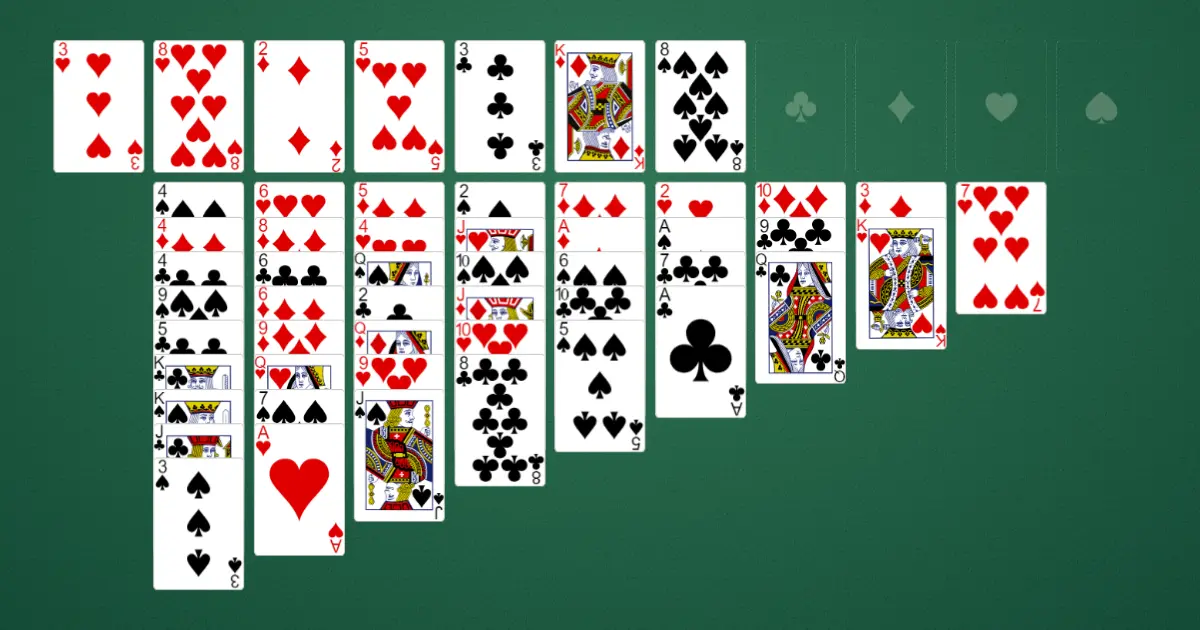
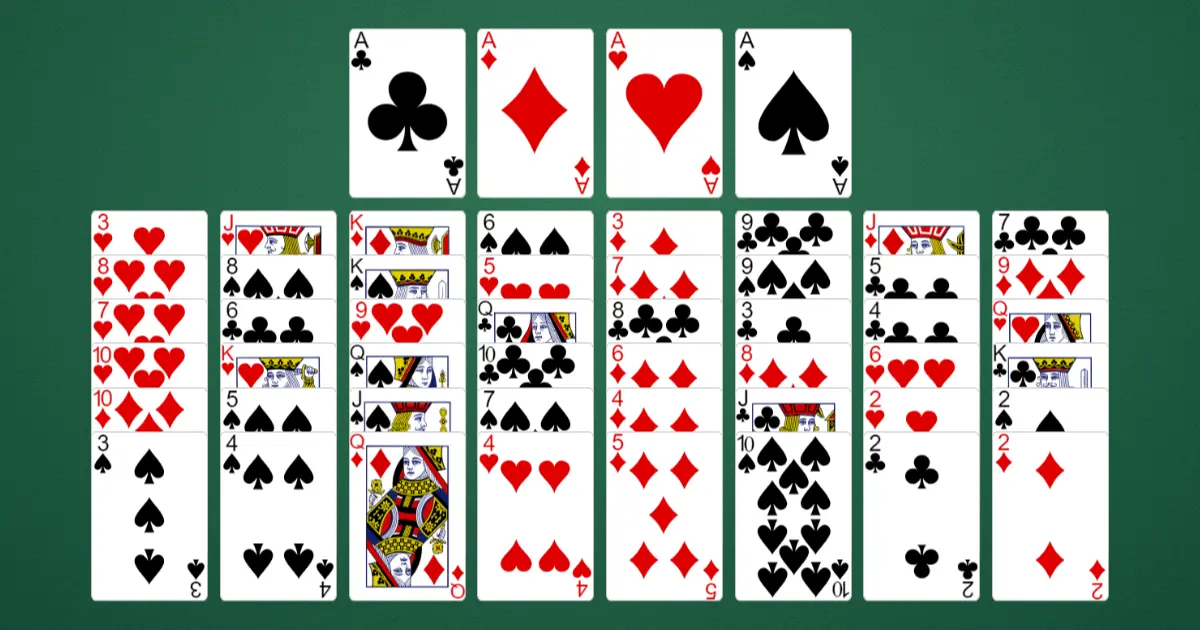
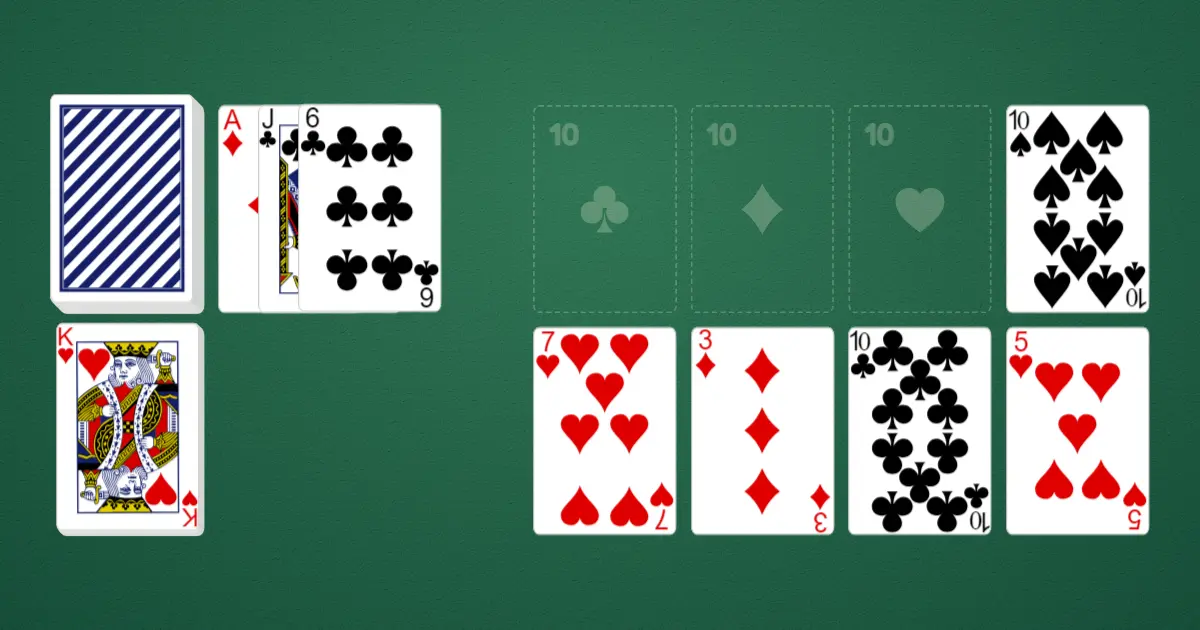
Canfield turns the stock three at a time and works through a thirteen-card reserve, building the foundations up from whatever rank the deal starts them on. Superior Canfield spreads the reserve face up, Storehouse starts the foundations with the Twos, Chameleon has a twelve-card reserve and three piles, and Four Seasons and Czarina have no reserve and five piles.
-
Canfield
Turn the stock three at a time and work through a thirteen-card reserve to build the foundations up from the deal's own rank.
-
Superior Canfield
Canfield with the whole reserve face up, runs that move from any card, and empty piles that any card may fill.
-
Storehouse
The Twos start the foundations, the piles build down in suit, and the stock is turned one card at a time with two redeals.
-
Chameleon
A twelve-card reserve and three piles built down in any suit, with one pass through the stock a card at a time.
-
Four Seasons
No reserve, five piles built down in any suit one card at a time, and one pass through the stock.
-
Czarina
Four Seasons with every emptied pile filled at once from the stock, and from the waste once the stock runs out.
Forty Thieves
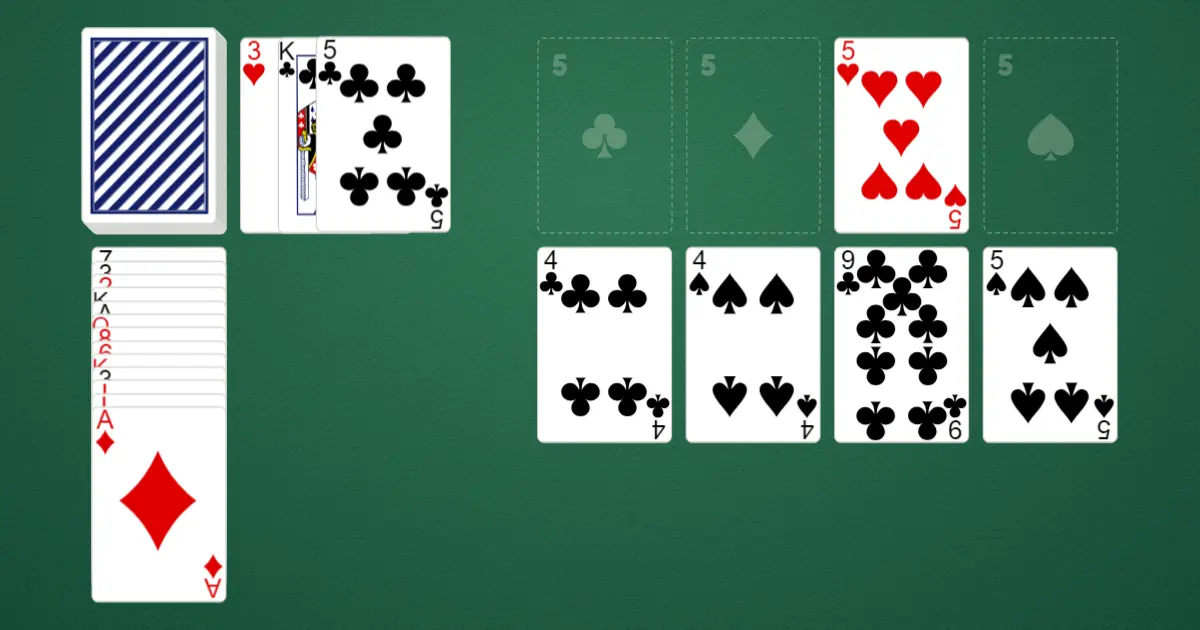
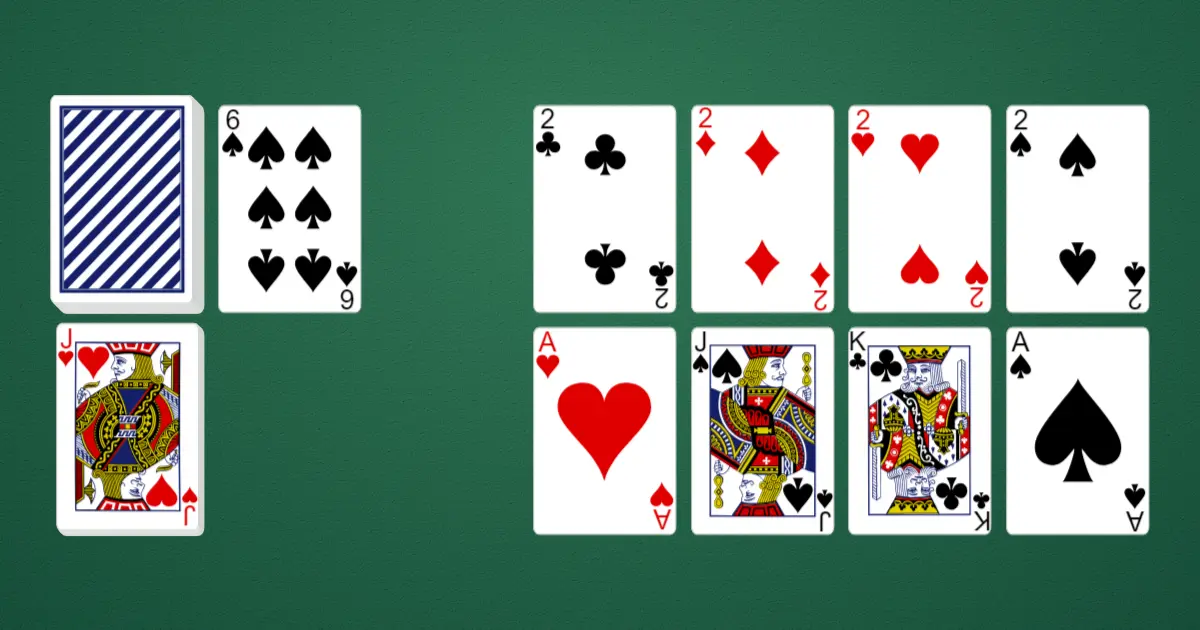
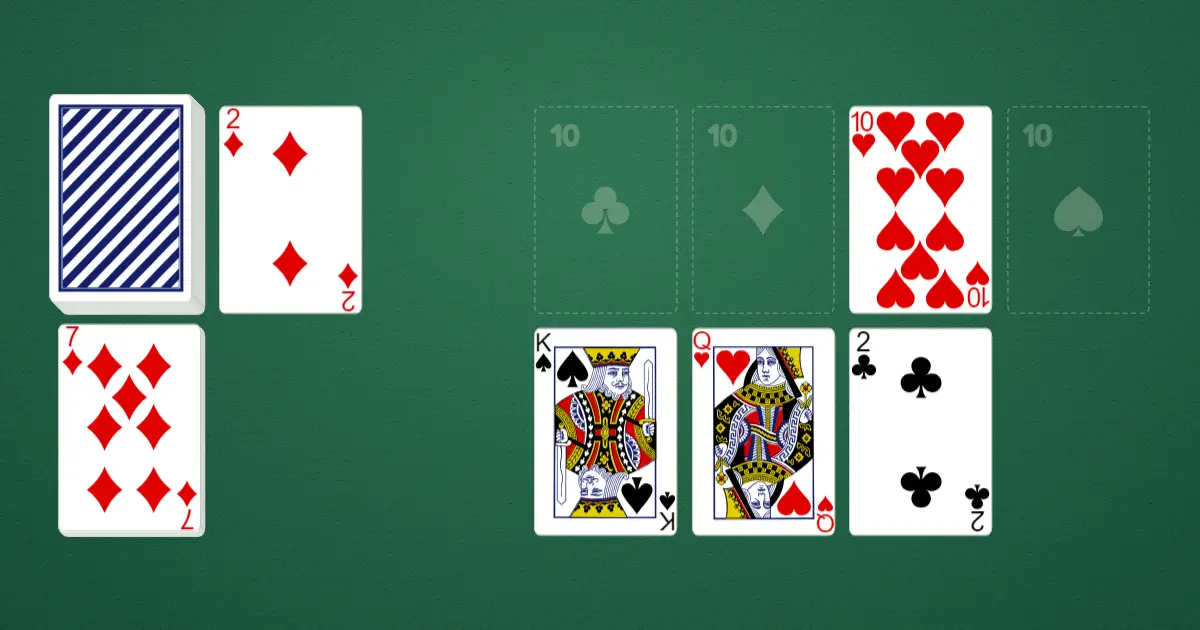
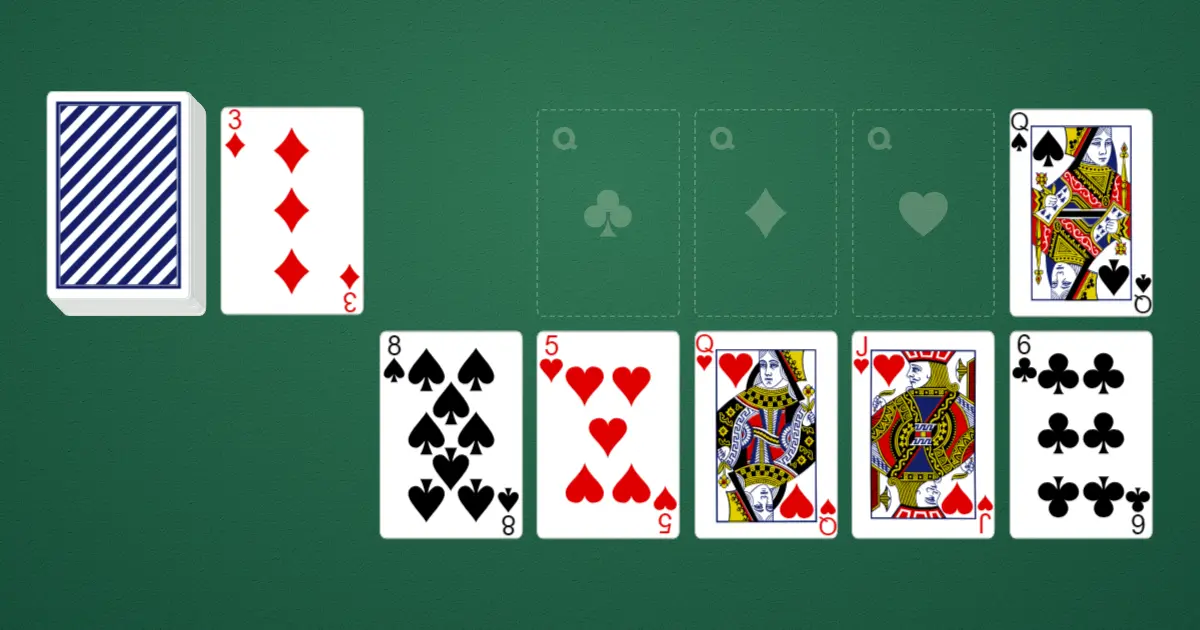
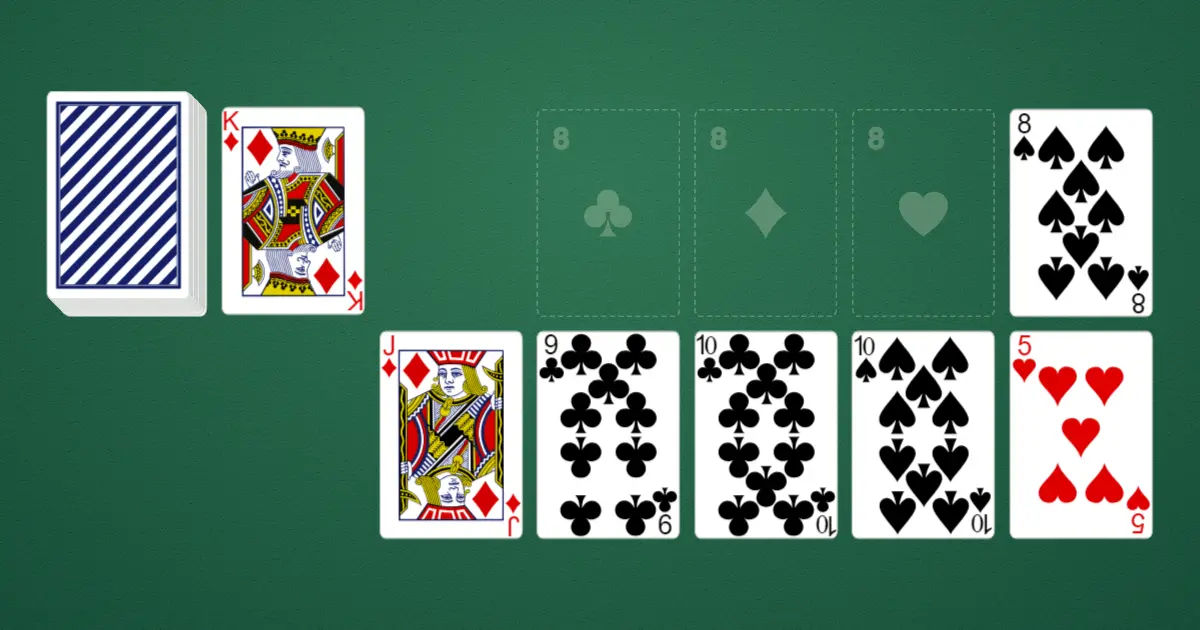
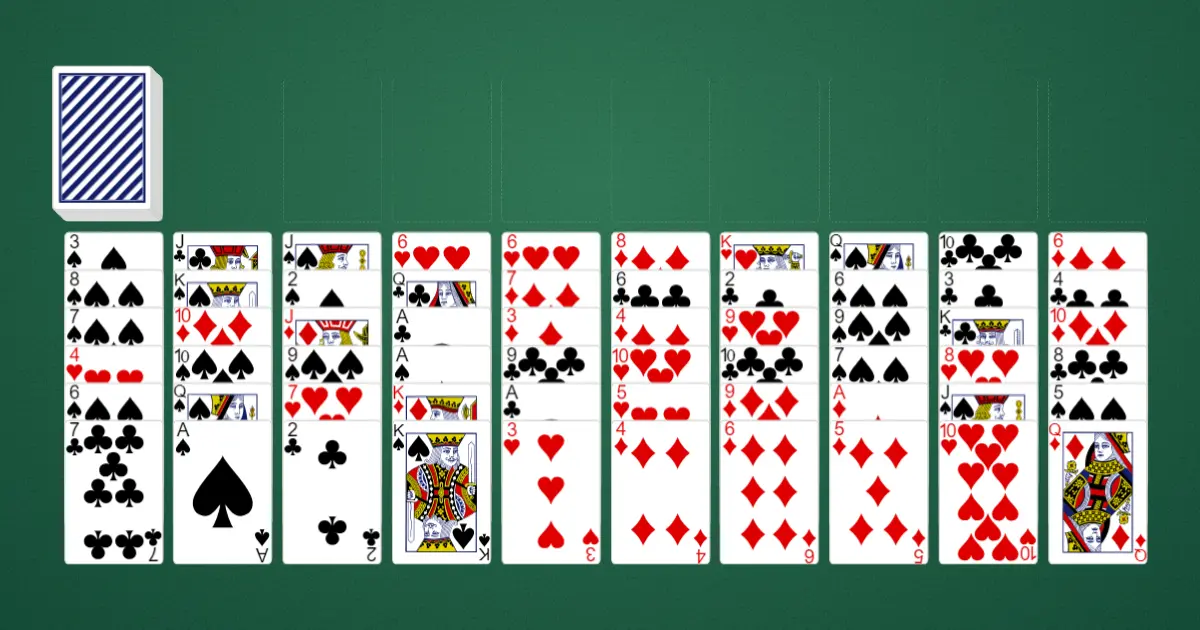
Forty Thieves deals two decks into ten piles and moves only one card at a time. Its relatives change the number of piles or decks, deal some cards face down, build in alternate colours, in any suit but a card's own or regardless of suit, move runs, allow a redeal, or deal the stock onto the piles.
-
Forty Thieves
Two decks dealt face up into ten piles of four, built down in suit one card at a time, with one pass through the stock.
-
Forty Buccaneers
Forty Thieves with one redeal, so you go through the stock twice.
-
Forty Pirates
Forty Thieves with the stock turned three cards at a time and two redeals.
-
San Juan Hill
Forty Thieves with all eight Aces put on the foundations before the deal.
-
Lucas
Thirteen piles of three built down in suit, with all eight Aces on the foundations before the deal.
-
Limited
Twelve piles of three built down in suit, one card at a time, with one pass through the stock.
-
Little Forty
Piles built down regardless of suit, runs in one suit that move together, and the stock turned three at a time with three redeals.
-
Streets
Forty Thieves with the piles built down in alternating colours.
-
Maria
Nine piles of four built down in alternating colours, one card at a time, with one pass through the stock.
-
Roosevelt
Seven piles of four built down in alternating colours, one card at a time, with one pass through the stock.
-
Lower 48
Eight piles of five built down in alternating colours, one card at a time, with one redeal.
-
Number Ten
Ten piles of four with two cards face down in each, built down in alternating colours, where runs move together.
-
Rank and File
Ten piles of four with three cards face down in each, built down in alternating colours, where runs move together.
-
Emperor
Ten piles of four with three cards face down in each, built down in alternating colours, where a foundation's top card may come back into play.
-
Deauville
Ten piles of four with three cards face down in each, built down in alternating colours, one card at a time.
-
Indian
Ten piles of three with one card face down in each, built down in any suit but a card's own.
-
Midshipman
Nine piles of four with two cards face down in each, built down in any suit but a card's own.
-
Double Rail
Five piles of one card built down regardless of suit, where runs move together, with one pass through the stock.
-
Fortune's Favor
One deck, the Aces on the foundations and twelve piles of one card built down in suit, each emptied pile filled at once from the waste or the stock.
-
Blockade
Twelve piles of one card built down in suit, where runs in one suit move together and the stock deals a card onto every pile.
-
Busy Aces
Twelve piles of one card built down in suit, one card at a time, with one pass through the stock.
-
Gypsy
Eight piles of three with two cards face down in each, built down in alternating colours, where runs move together and the stock deals a card onto every pile.
-
Miss Milligan
Eight piles of one card built down in alternating colours, where only a King or a run a King leads may be moved into an empty pile and, once the stock is spent, a card or run may be set aside in a reserve.
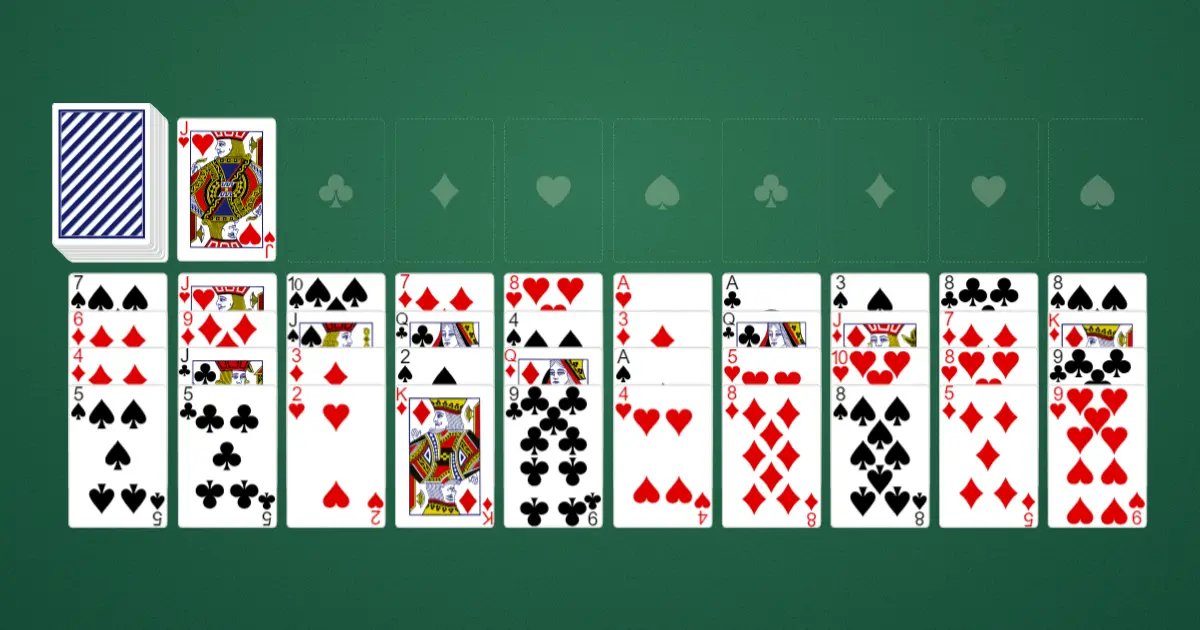
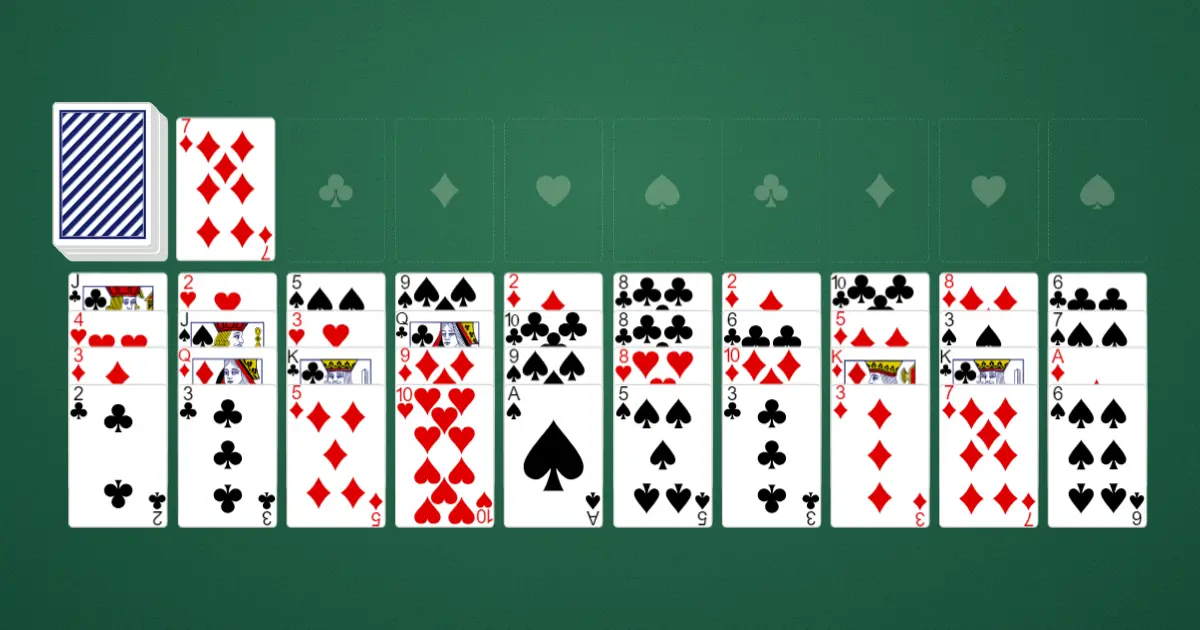
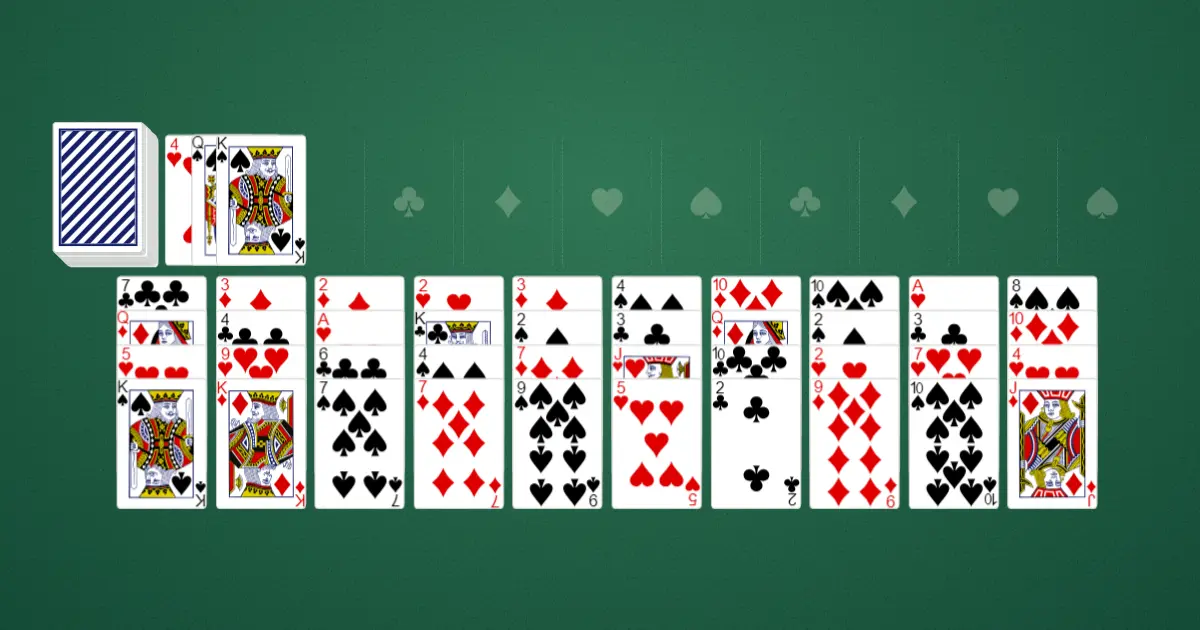
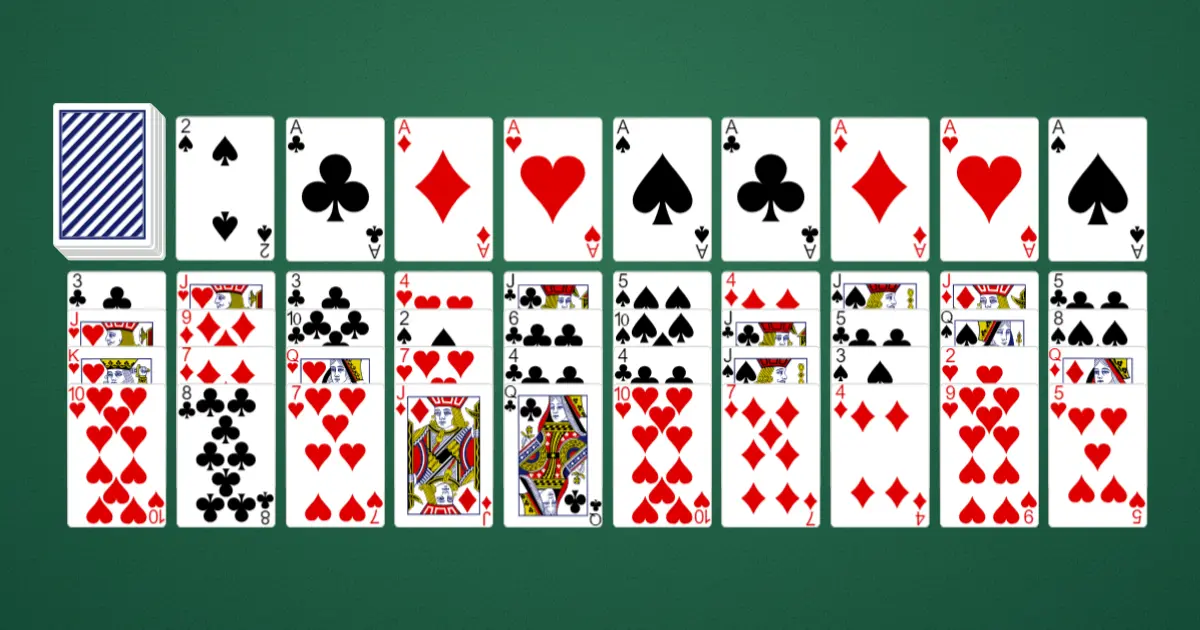
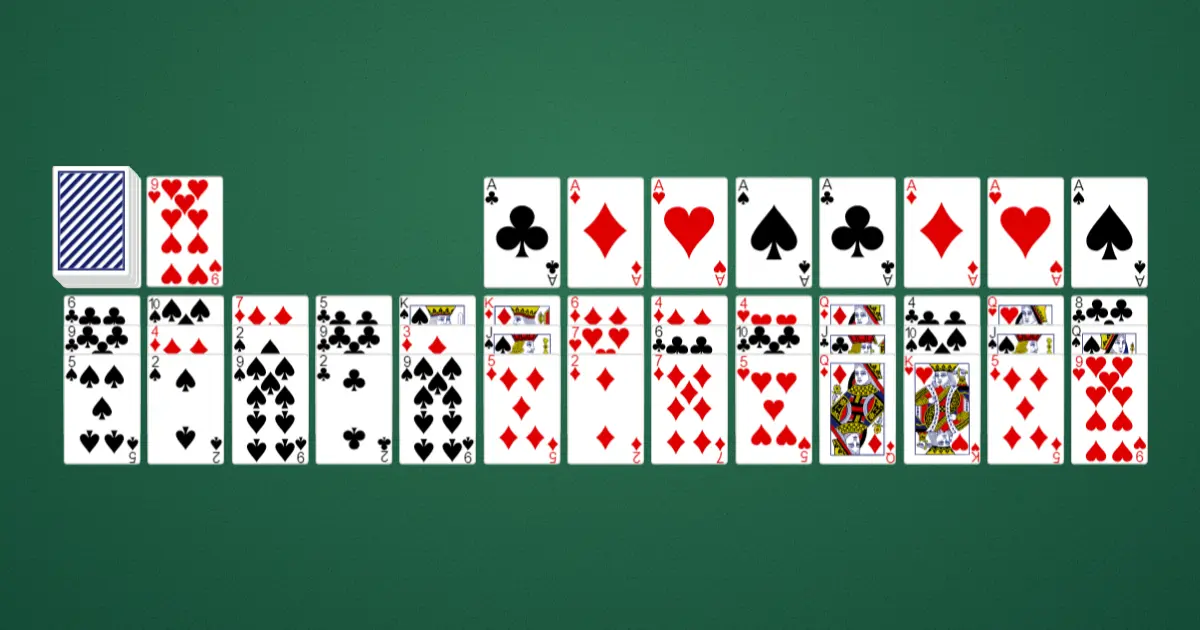
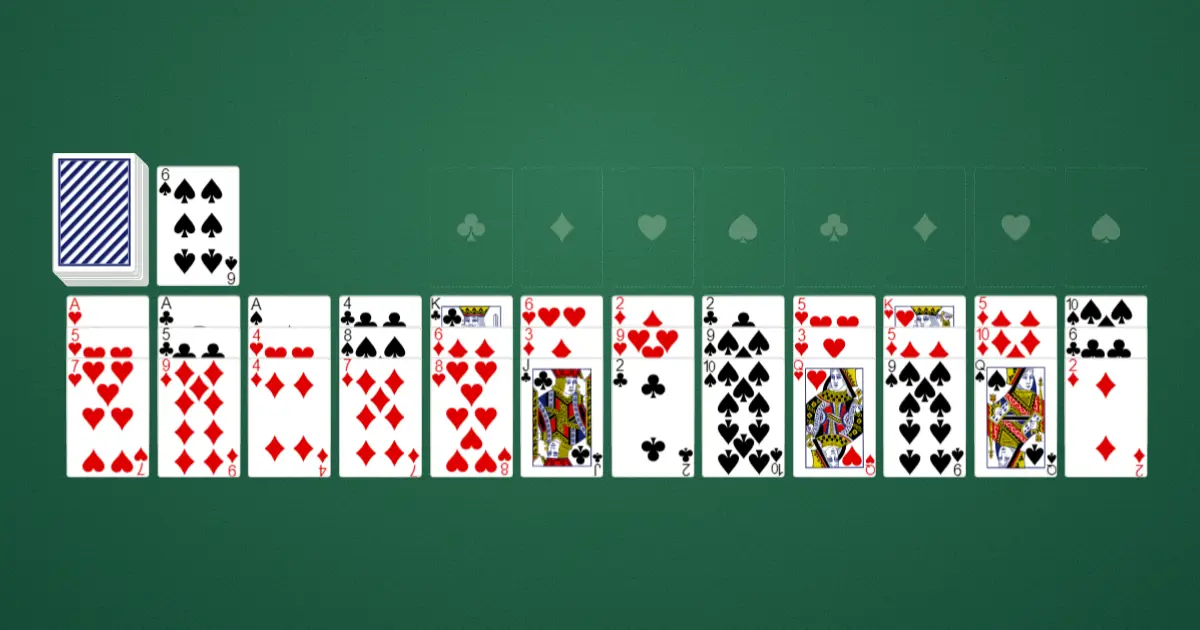
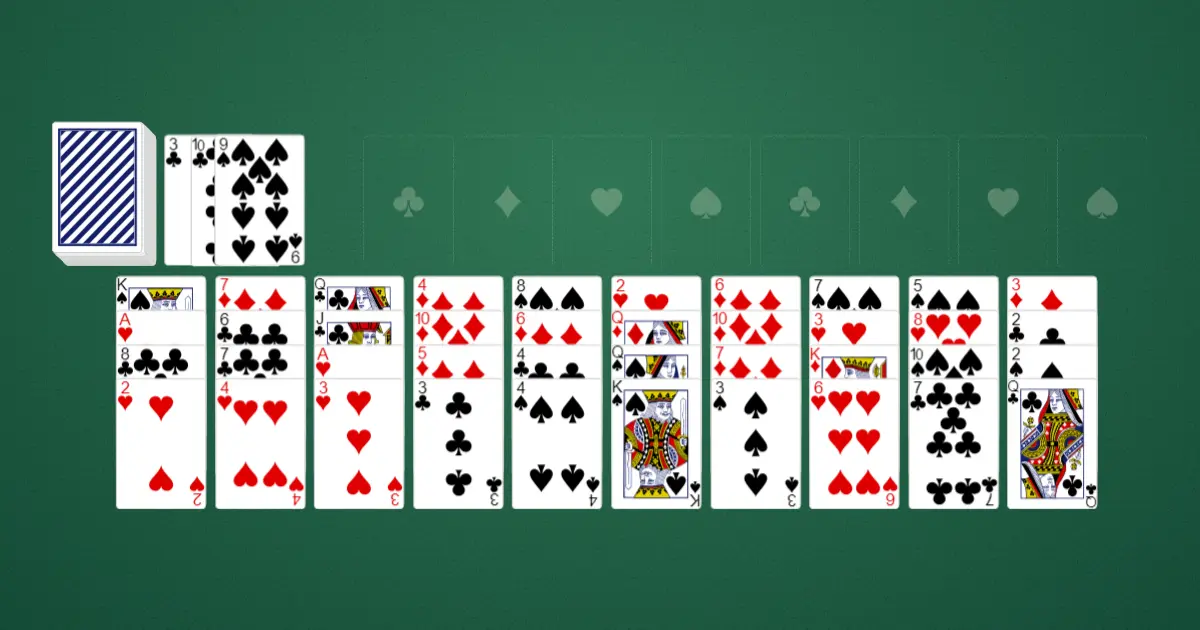
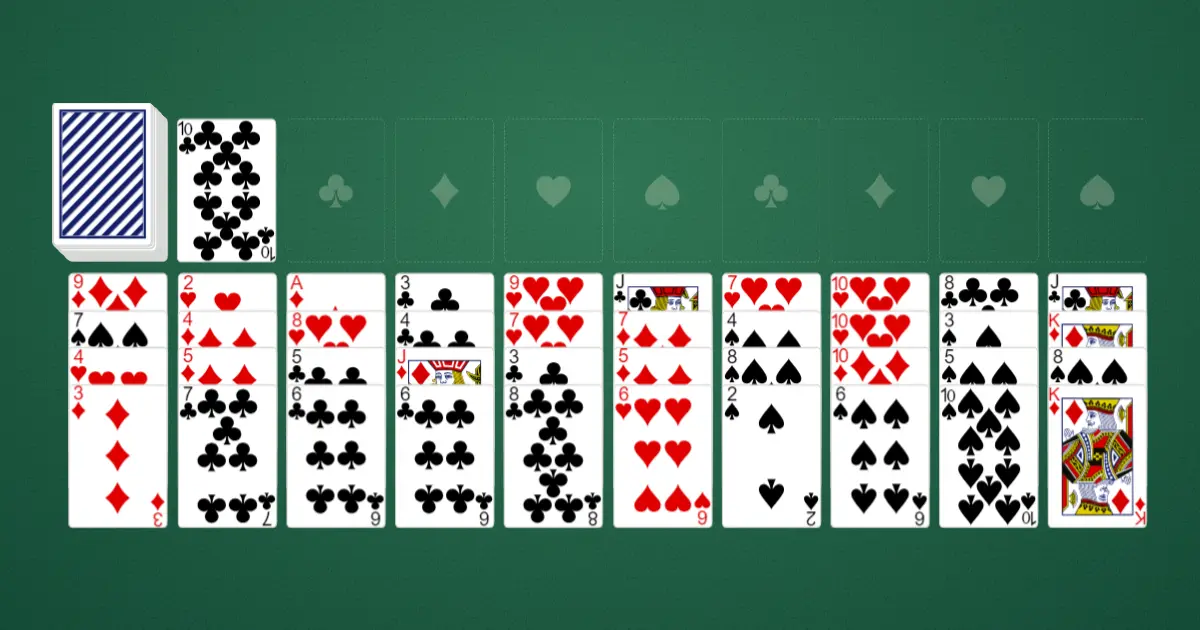
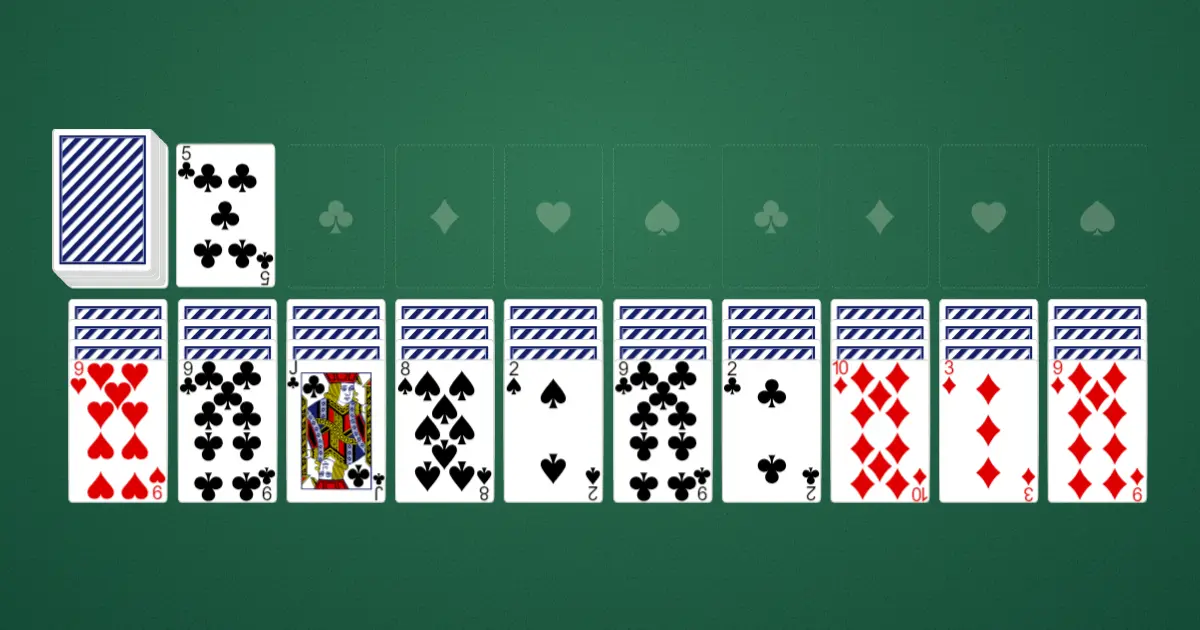
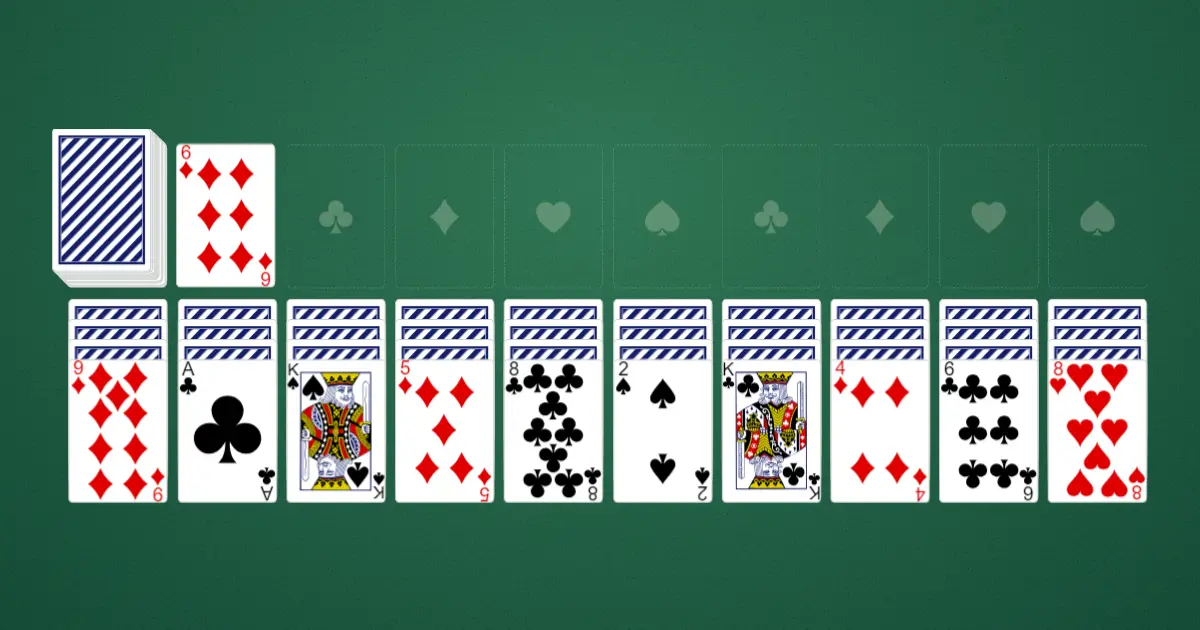
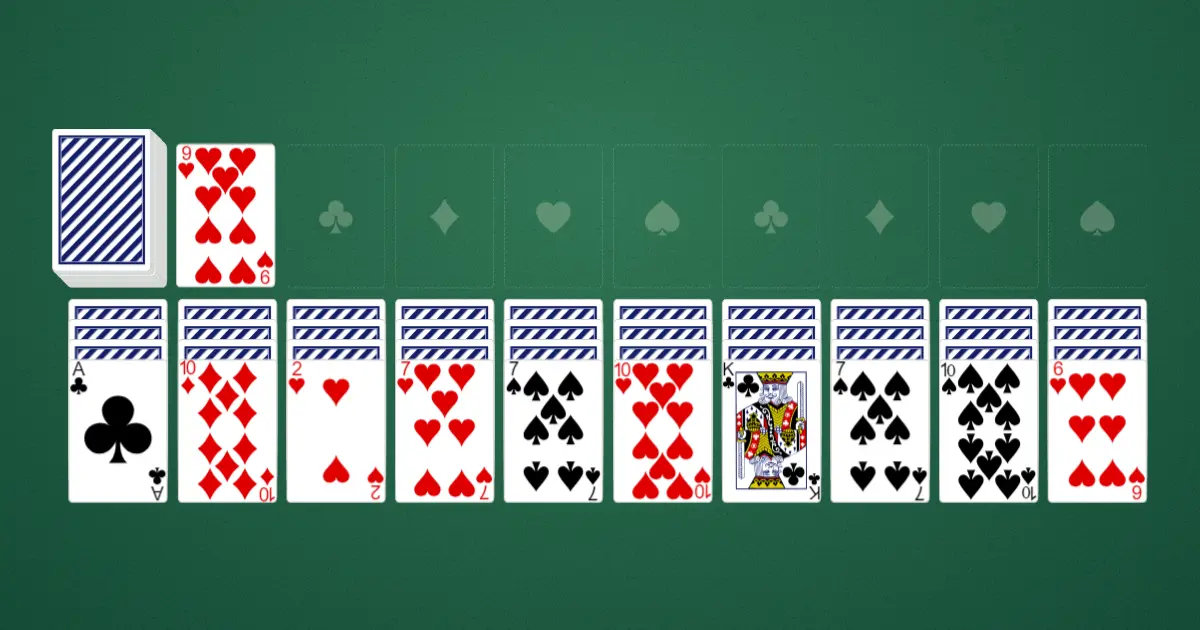
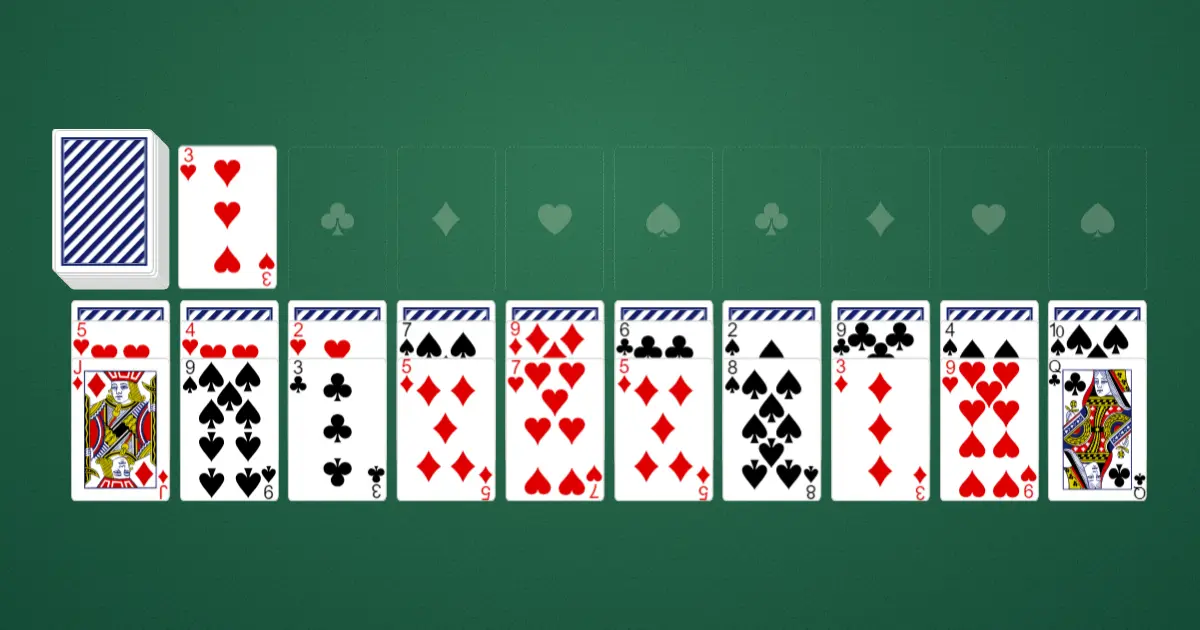
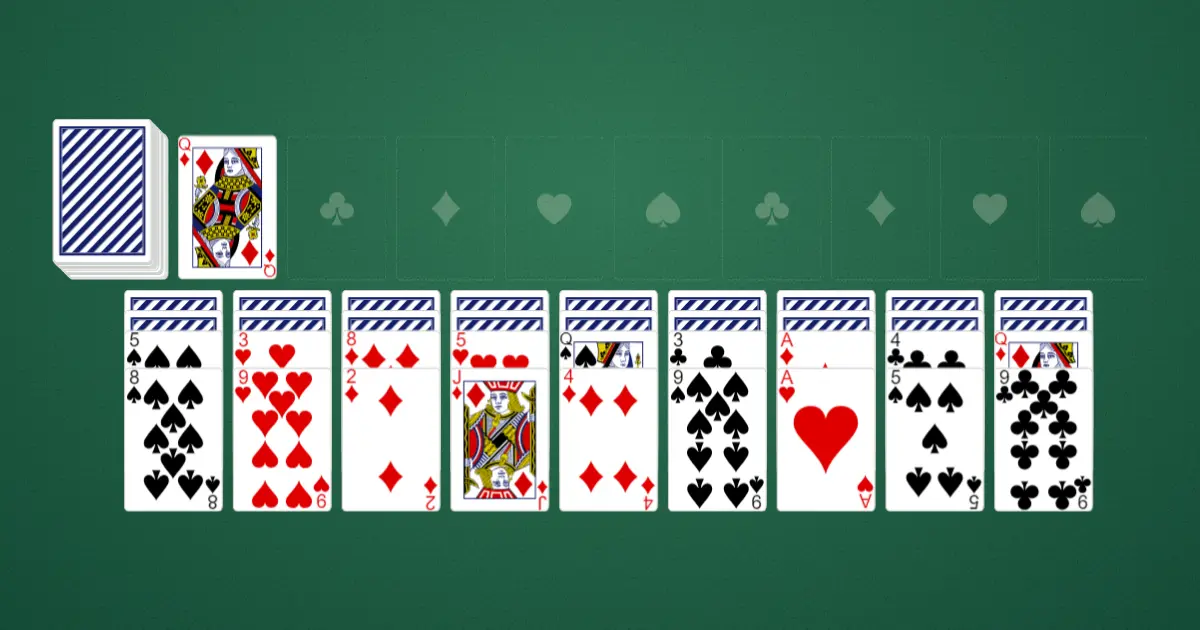
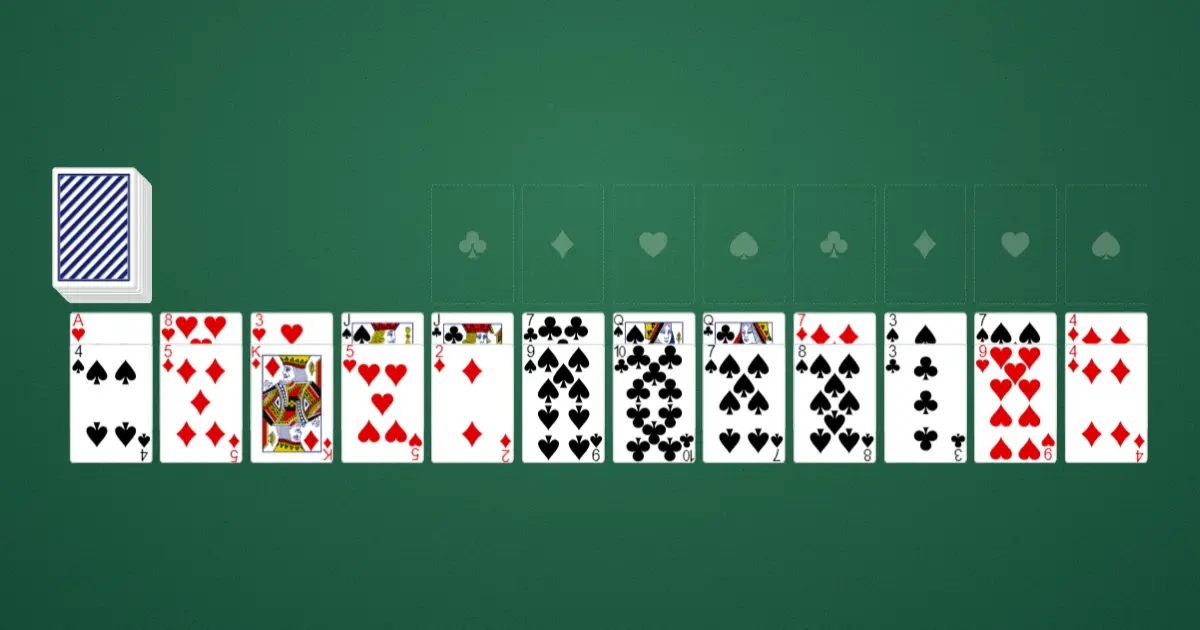
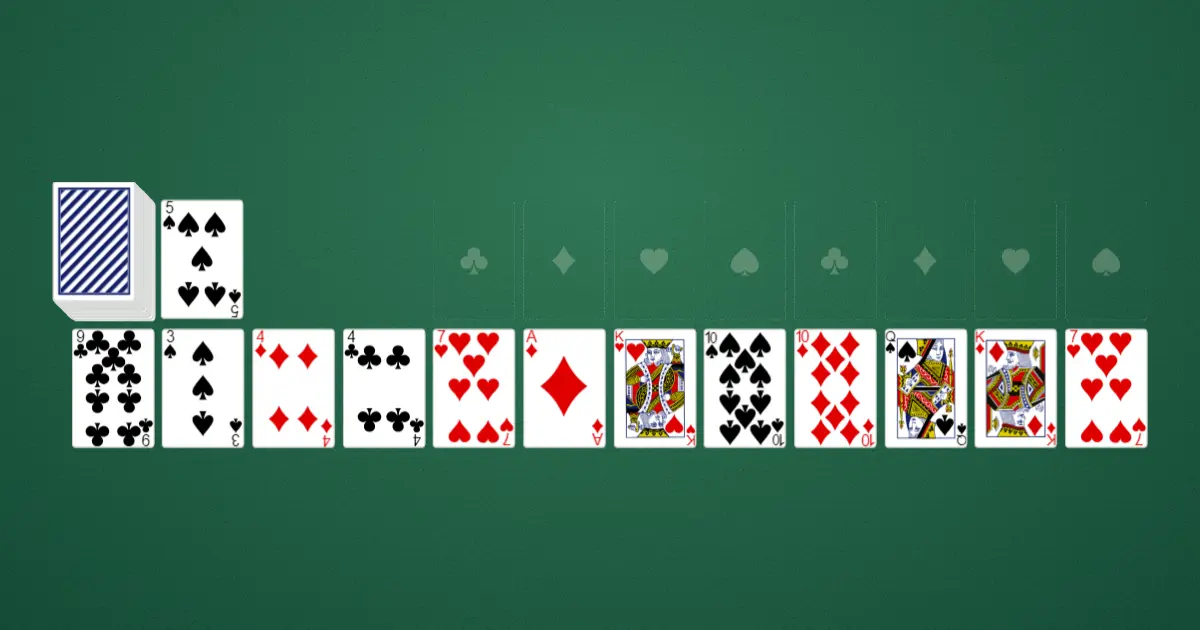
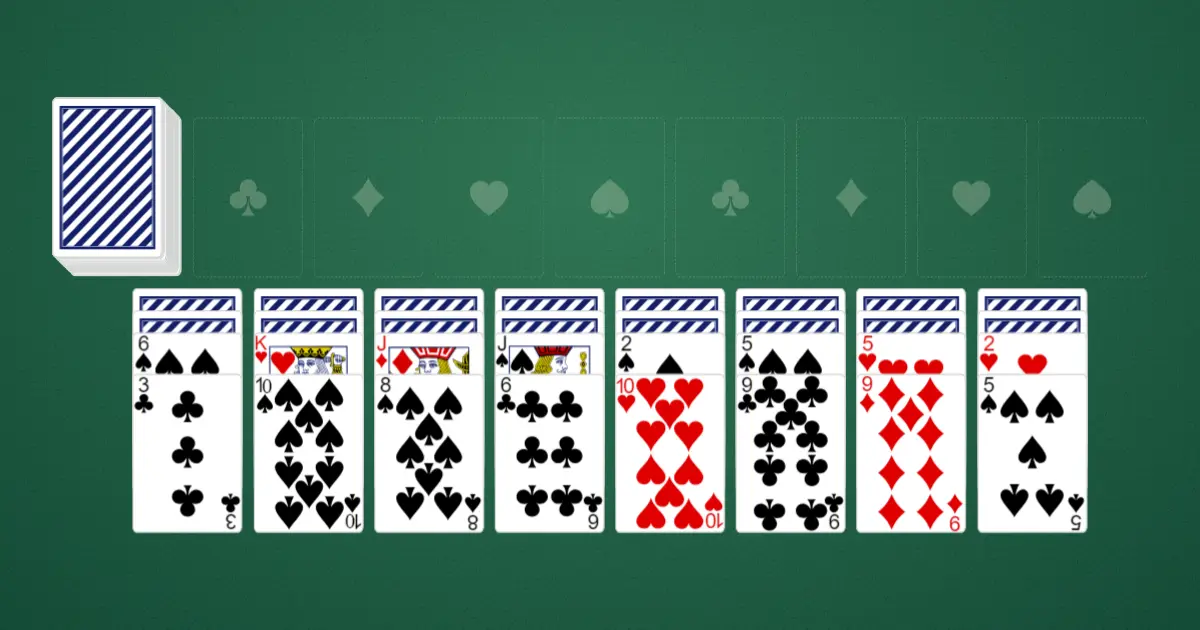
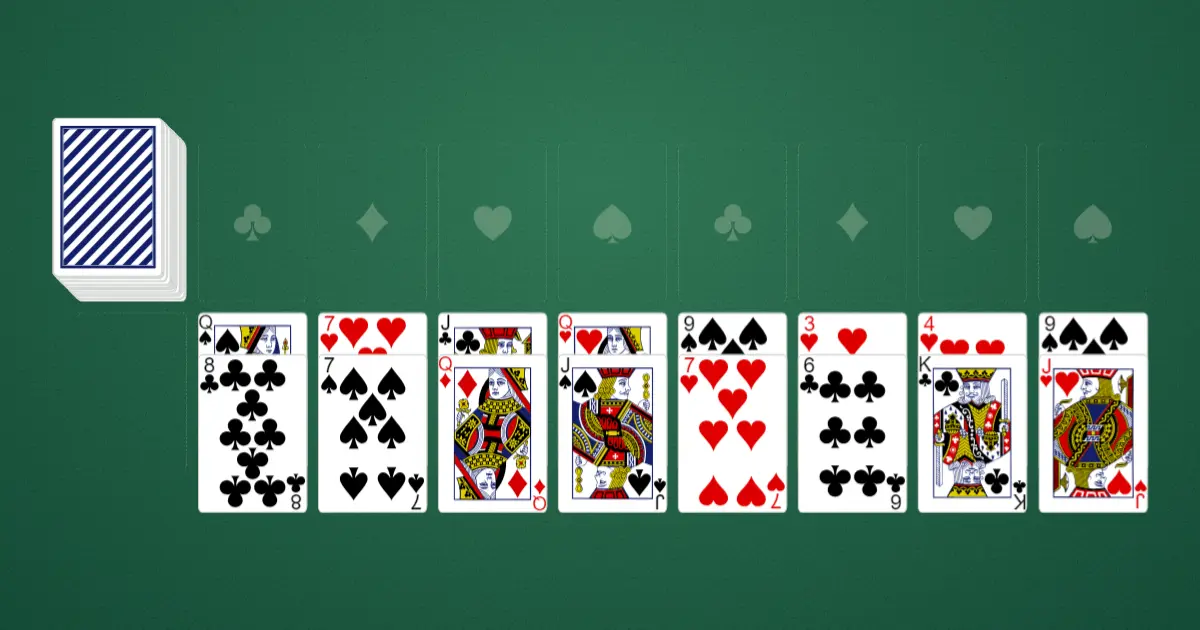
Yukon
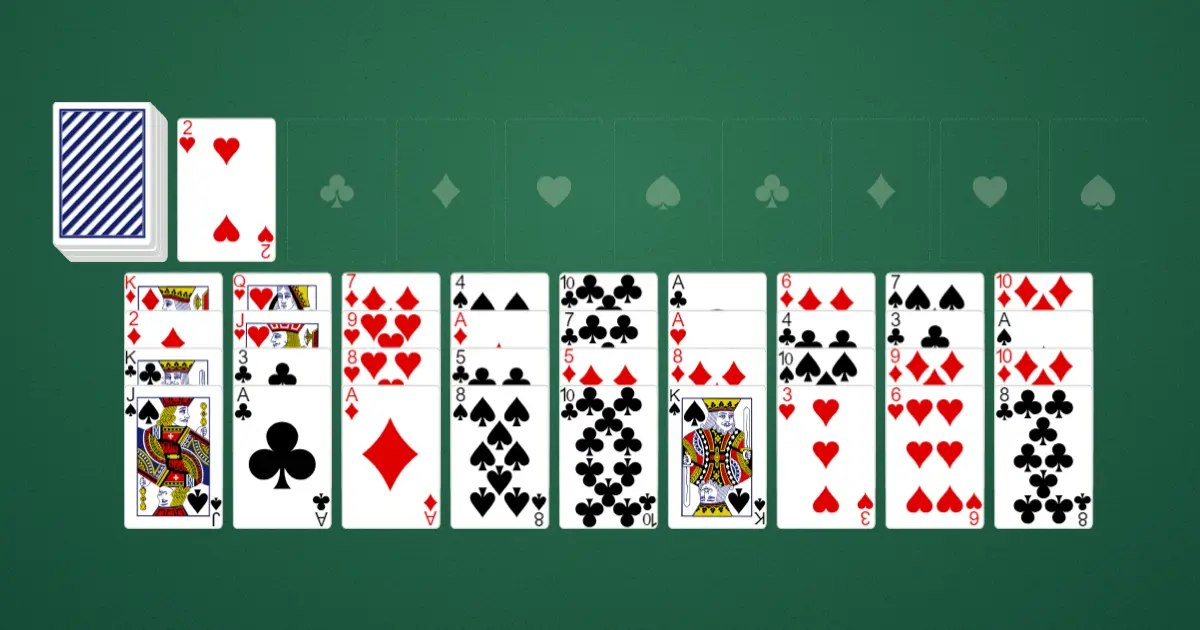
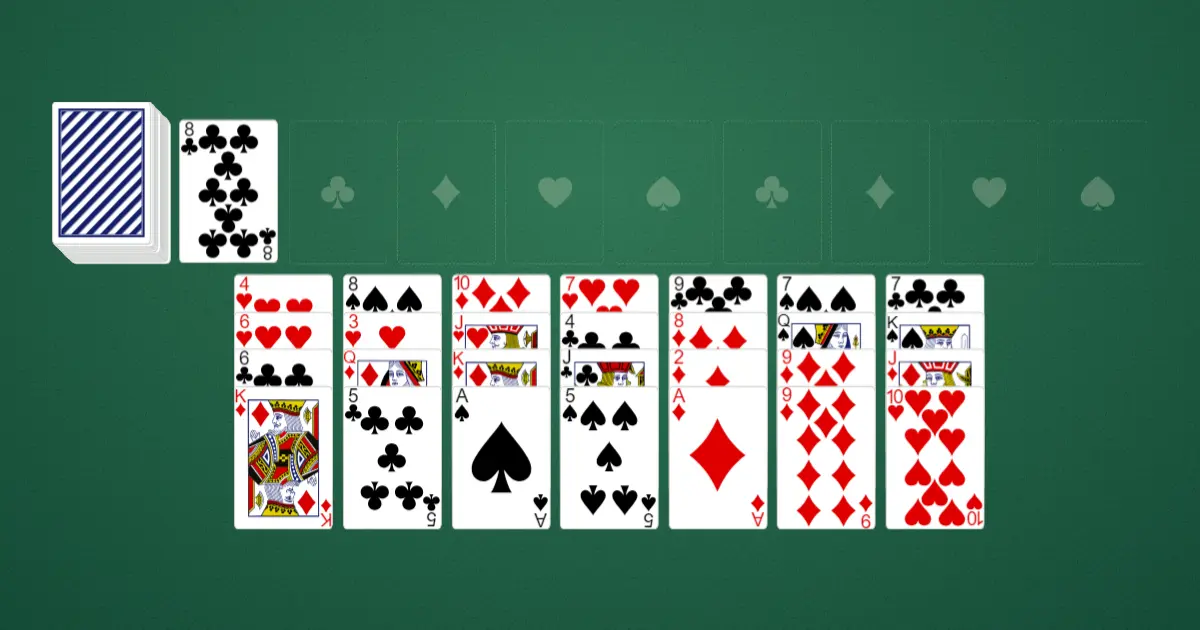
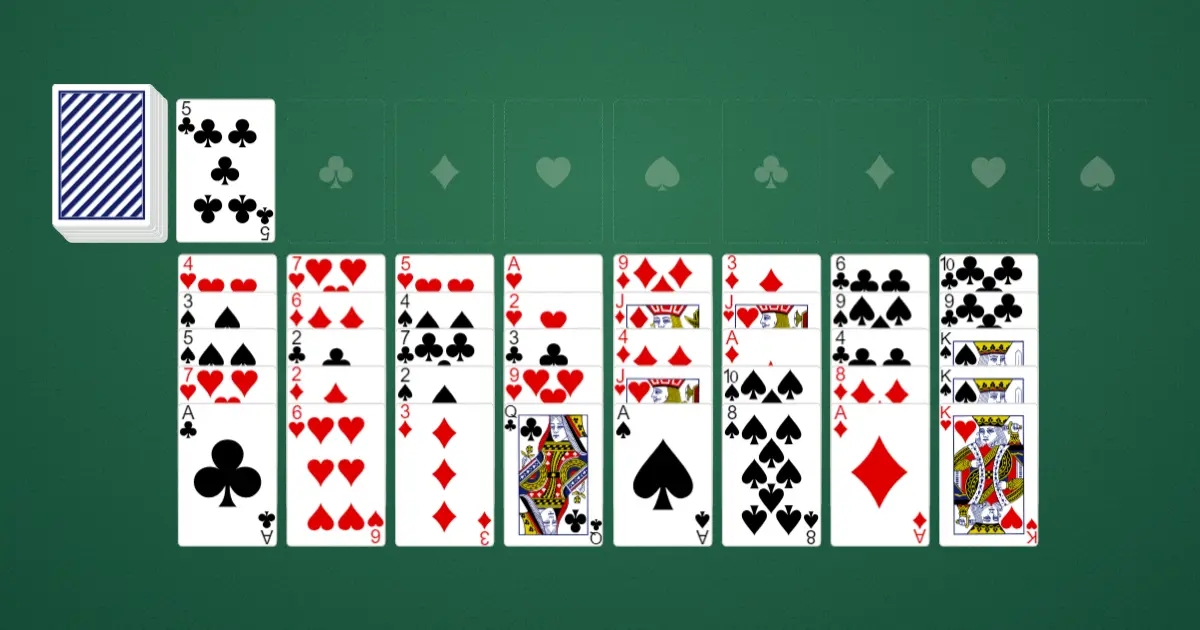
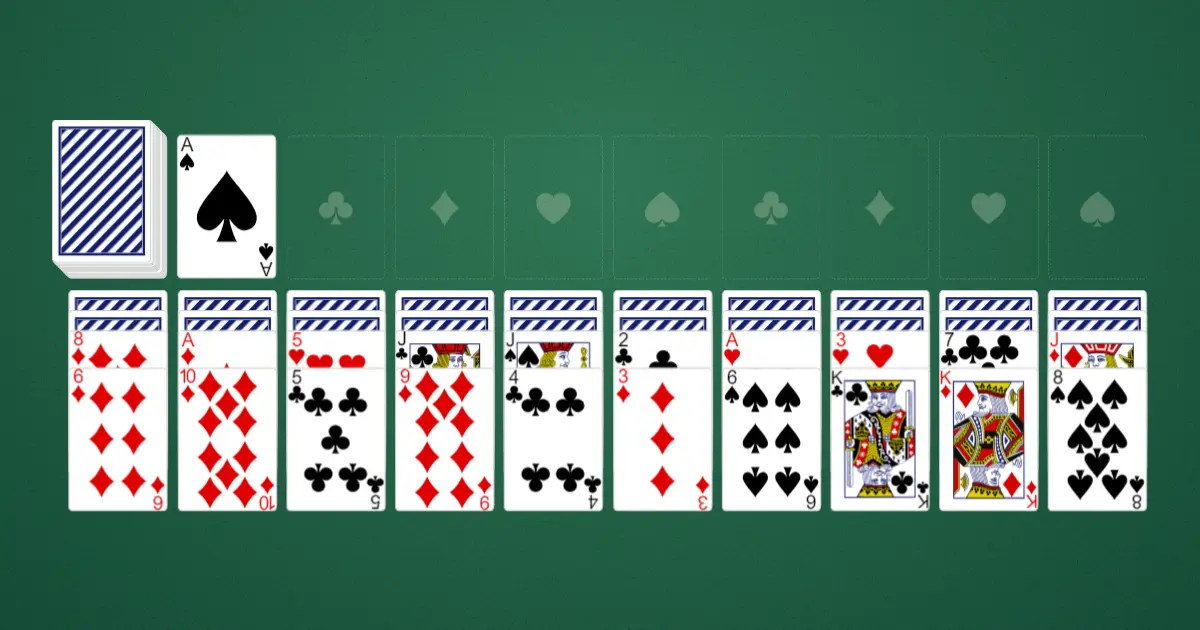
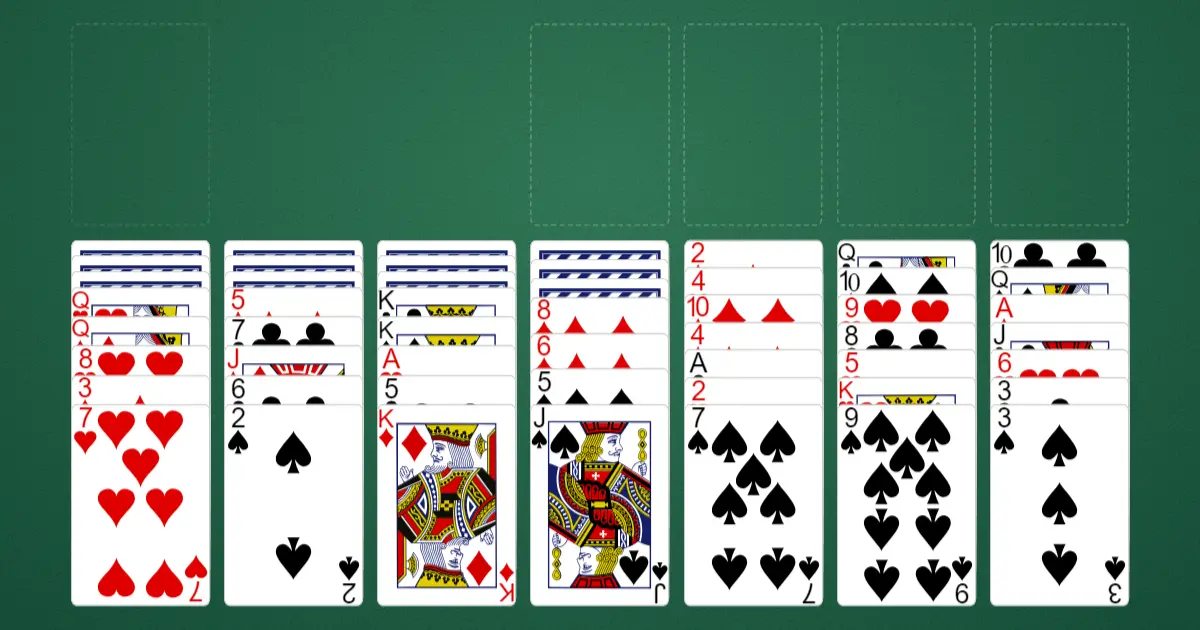
Yukon deals the whole deck into seven piles and lets any face-up card move with every card lying on it, in order or not. Its relatives add free cells, play with two or three decks, or turn a stock.
-
Yukon
One deck dealt into seven piles built down in alternating colours, where any face-up card moves with every card lying on it.
-
Moosehide
Yukon with the piles built down in any suit but a card's own.
-
Yukon Cells
Yukon with two free cells, each holding one card.
-
Yukon One Suit
Yukon dealt from four packs of the thirteen spades, where any card builds on any card one rank higher.
-
Double Yukon
Yukon with two decks dealt into ten piles and eight foundations.
-
Triple Yukon
Yukon with three decks dealt into thirteen piles and twelve foundations.
-
Australian Patience
Seven piles of four dealt face up and built down in suit, with the stock turned one card at a time and gone through once.
-
Russian Point
Seven piles built down in suit, with a stock that deals a card onto every pile.
-
Yukon Kings
Yukon with no foundations, won by building four runs from King down to Ace in the piles.
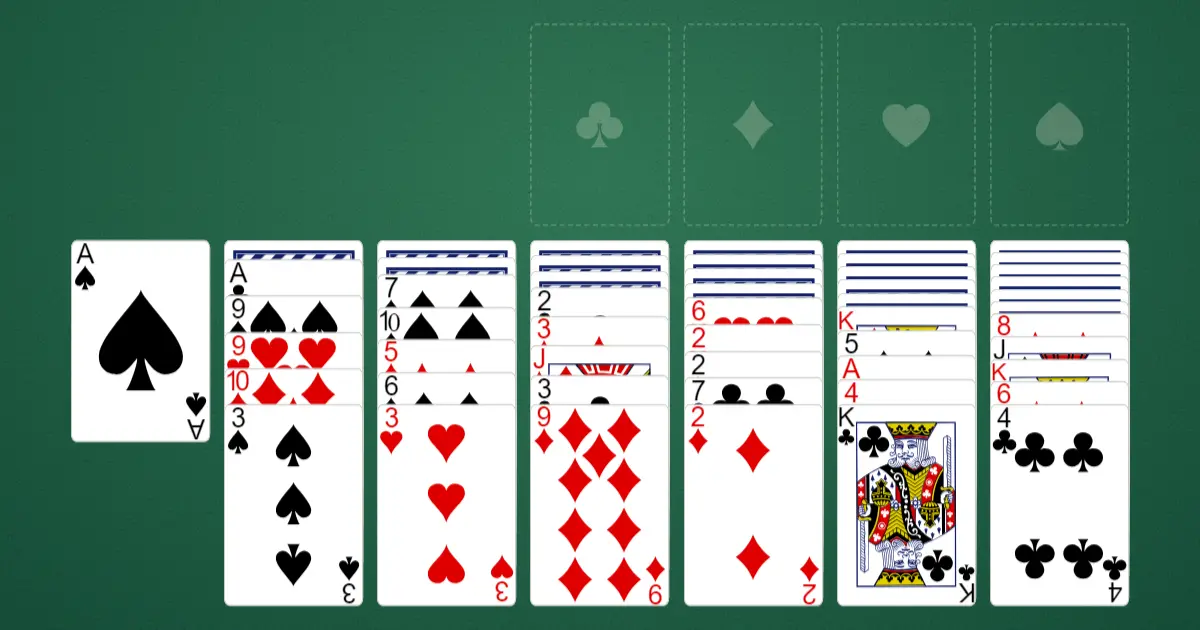
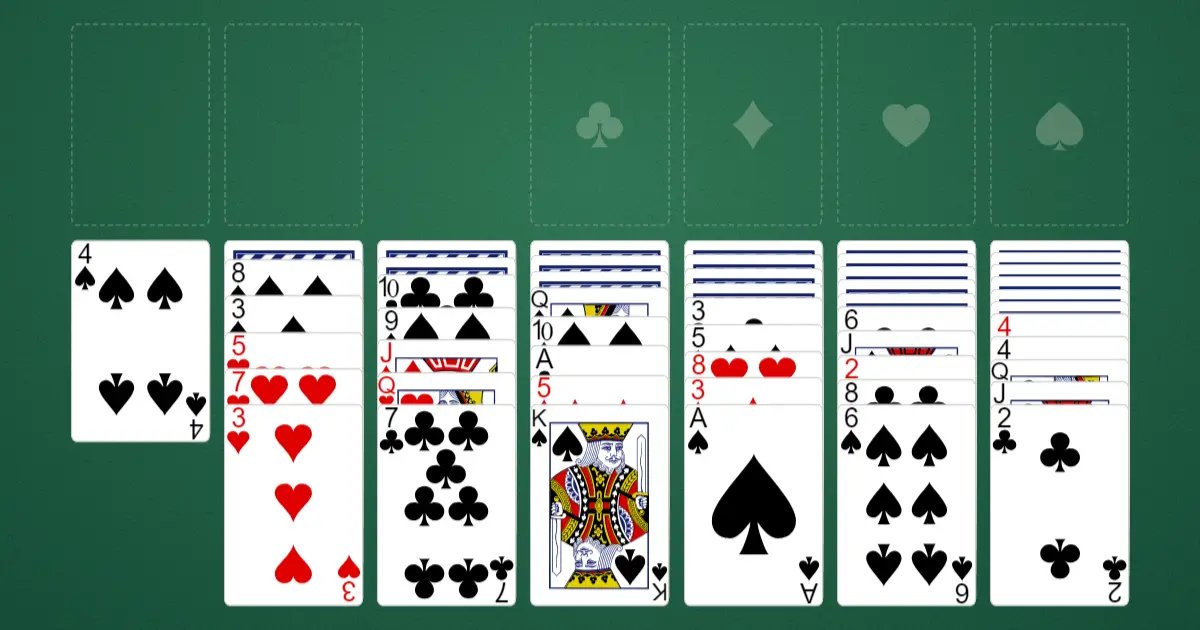
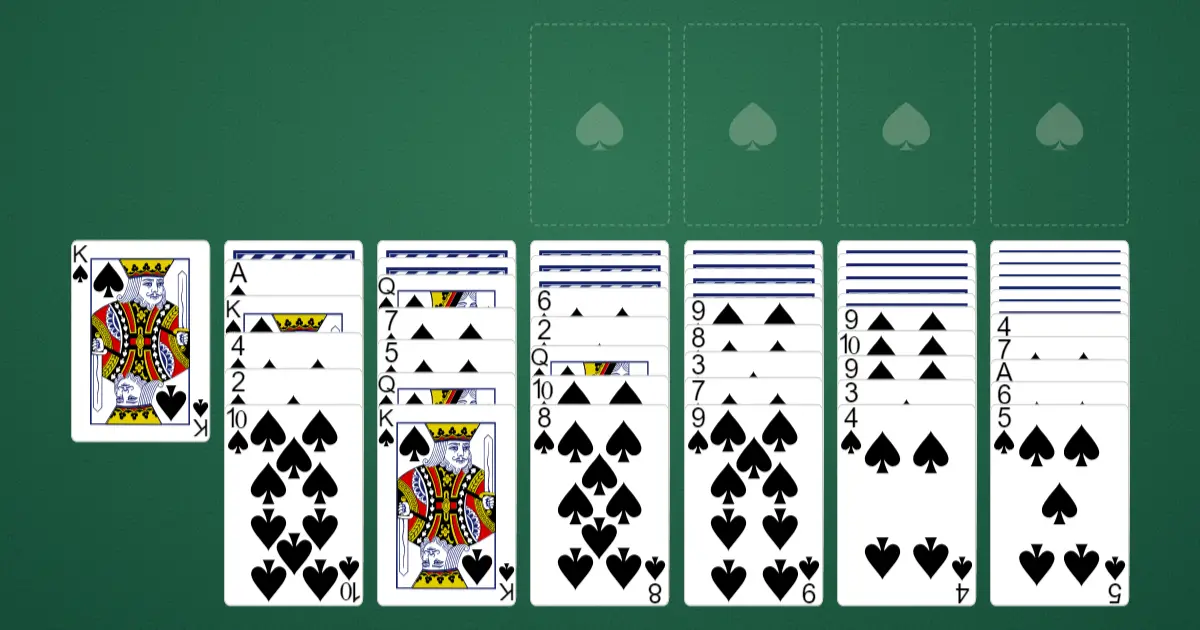
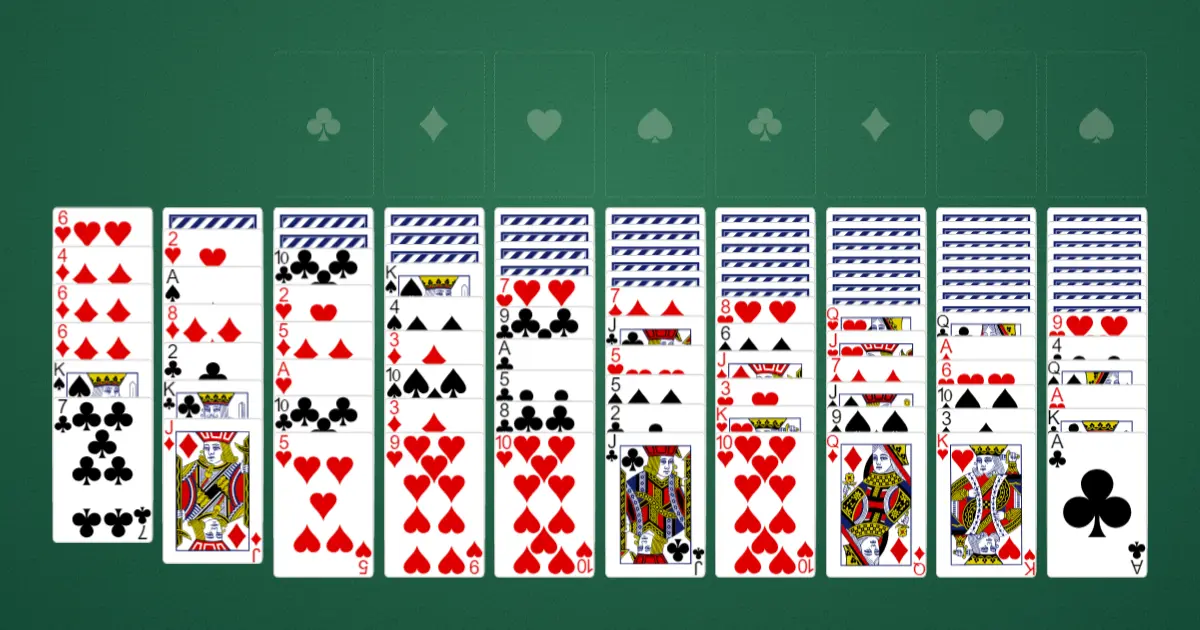
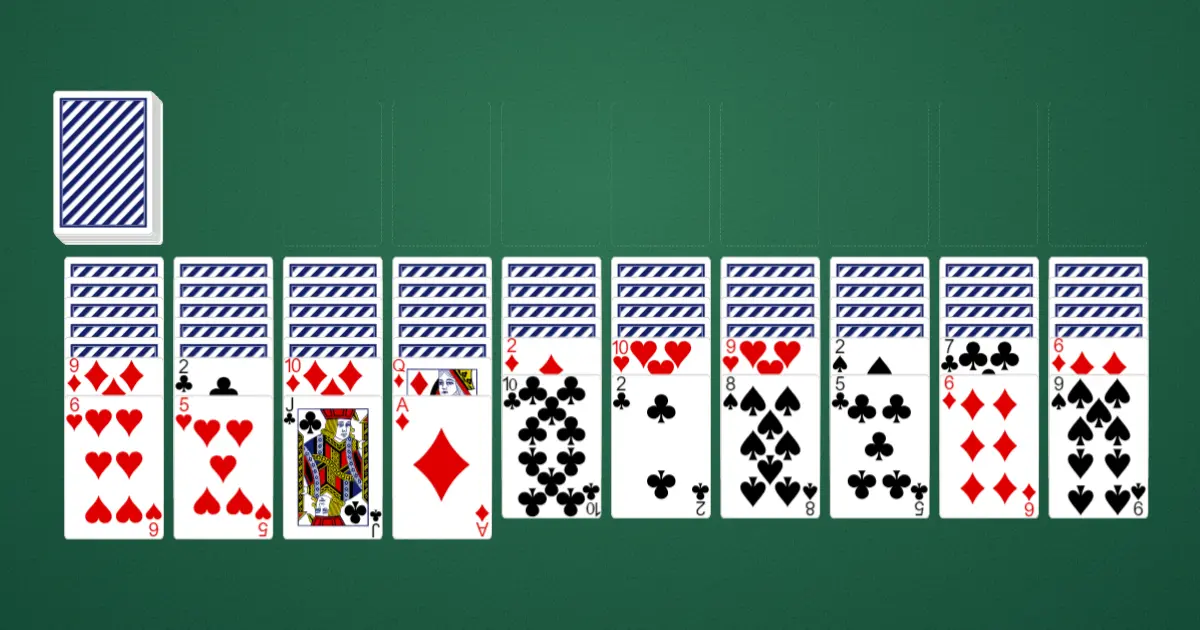
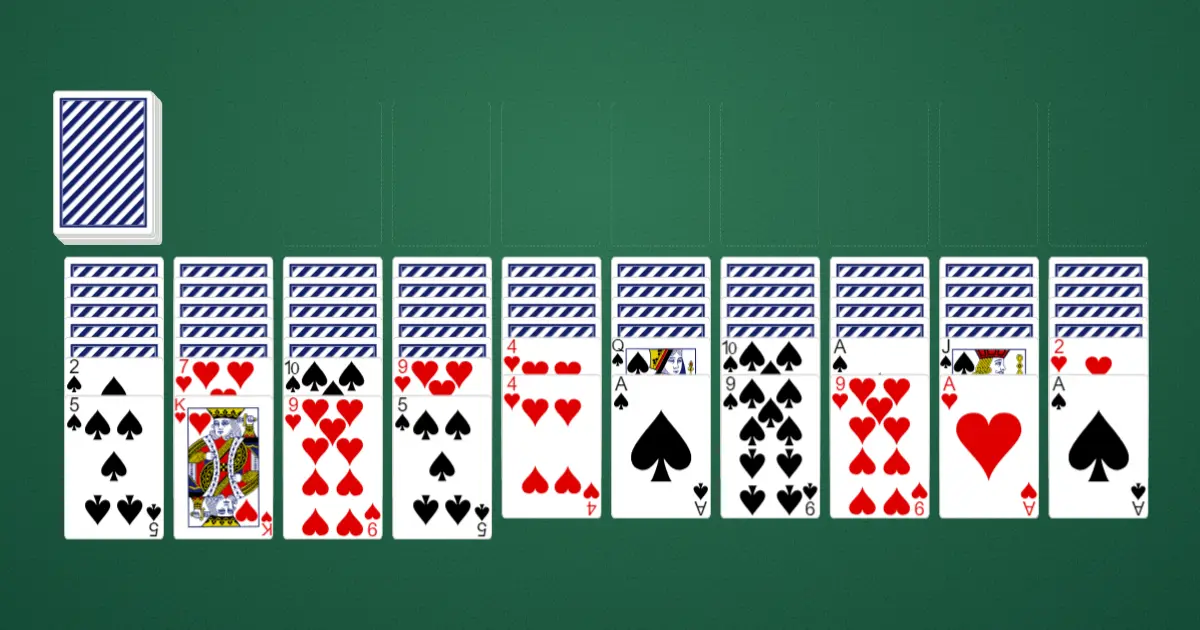
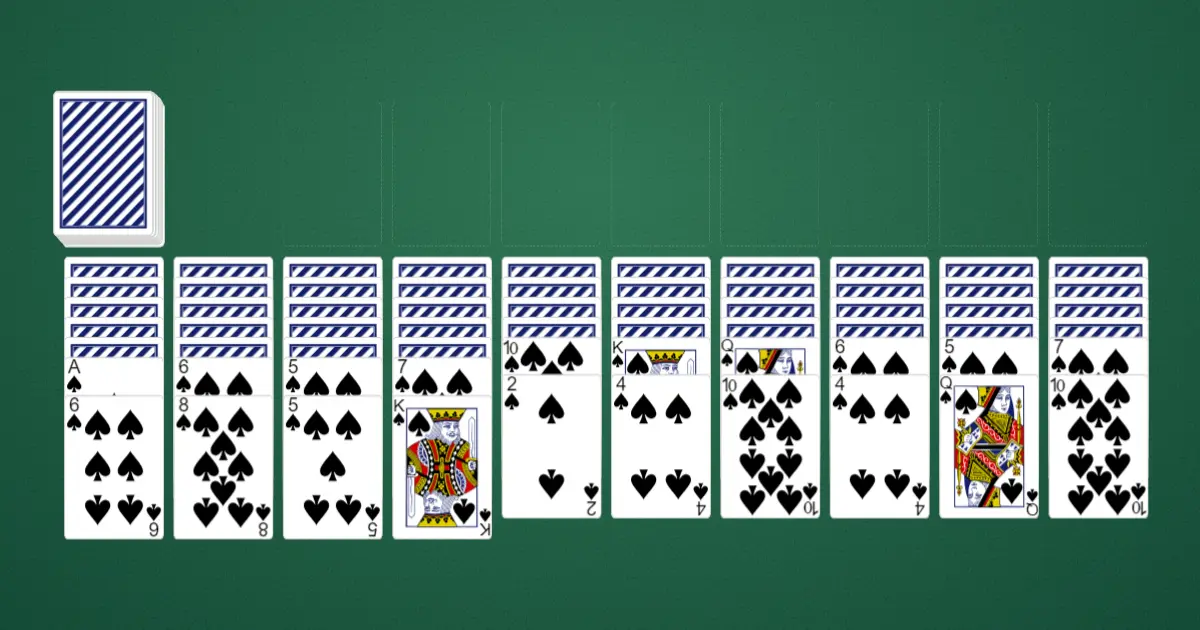
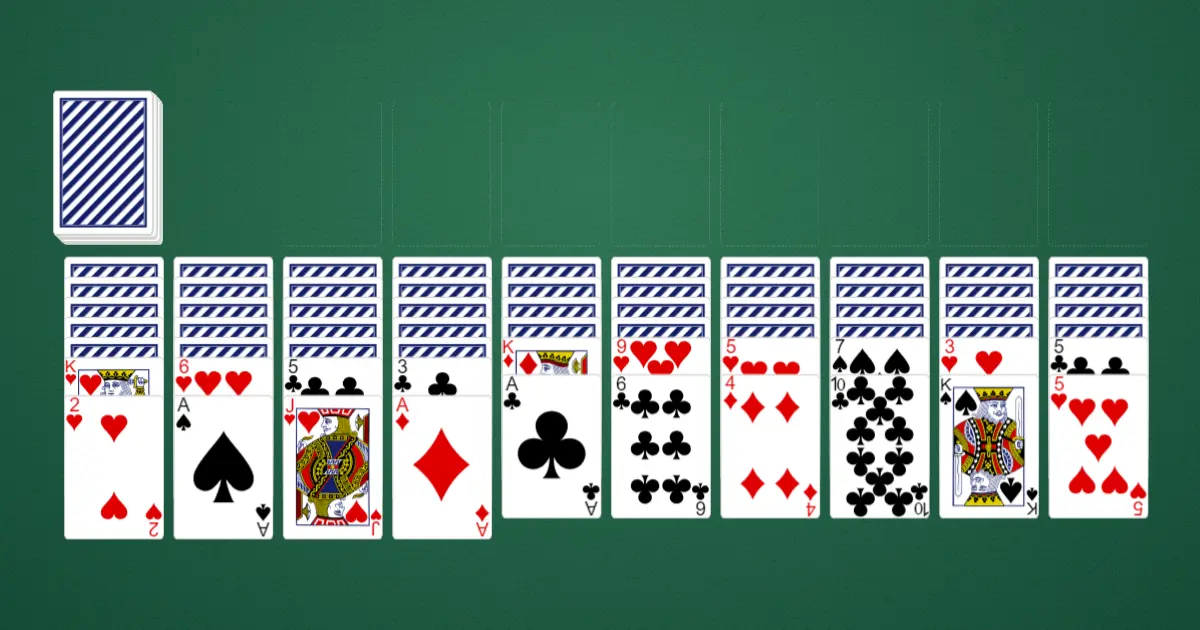
Spider
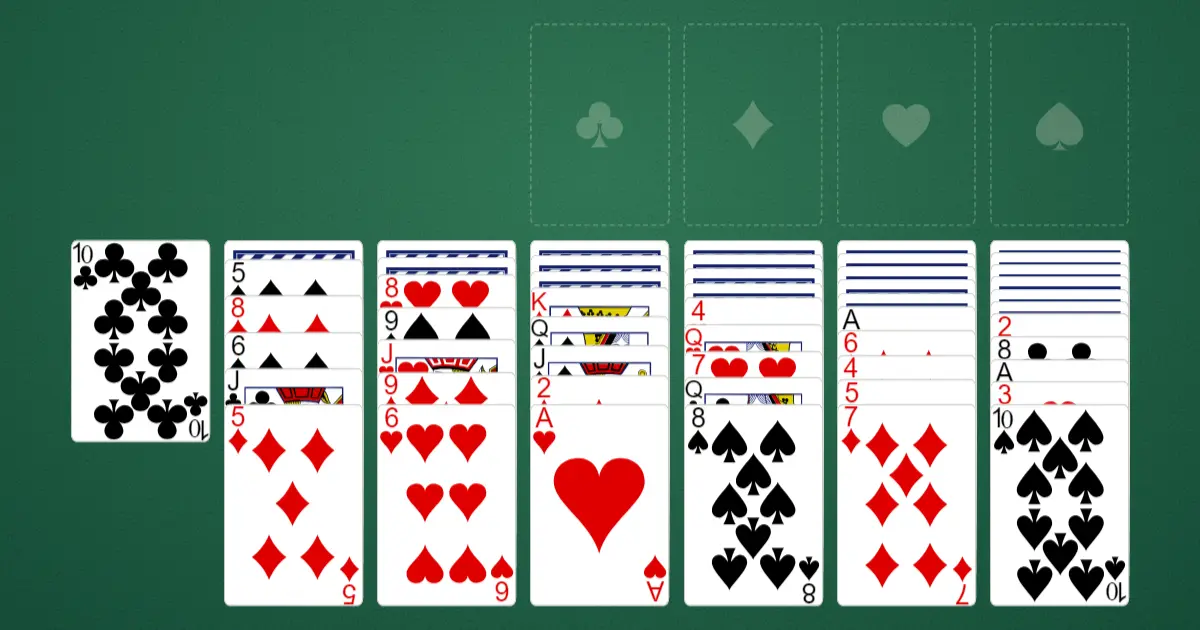
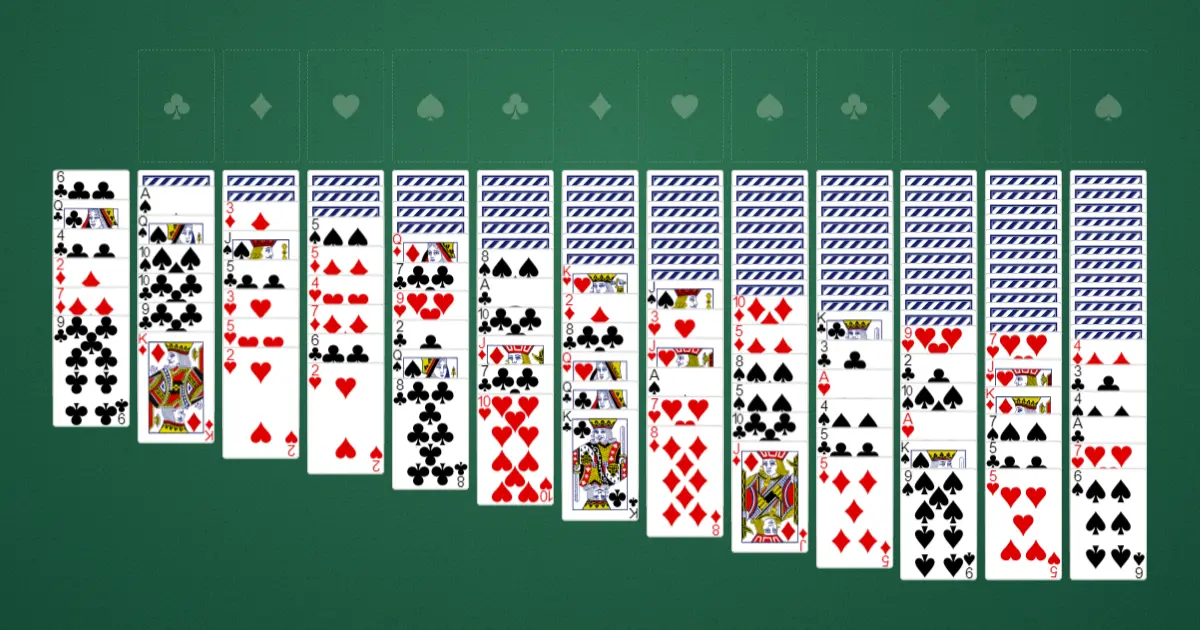
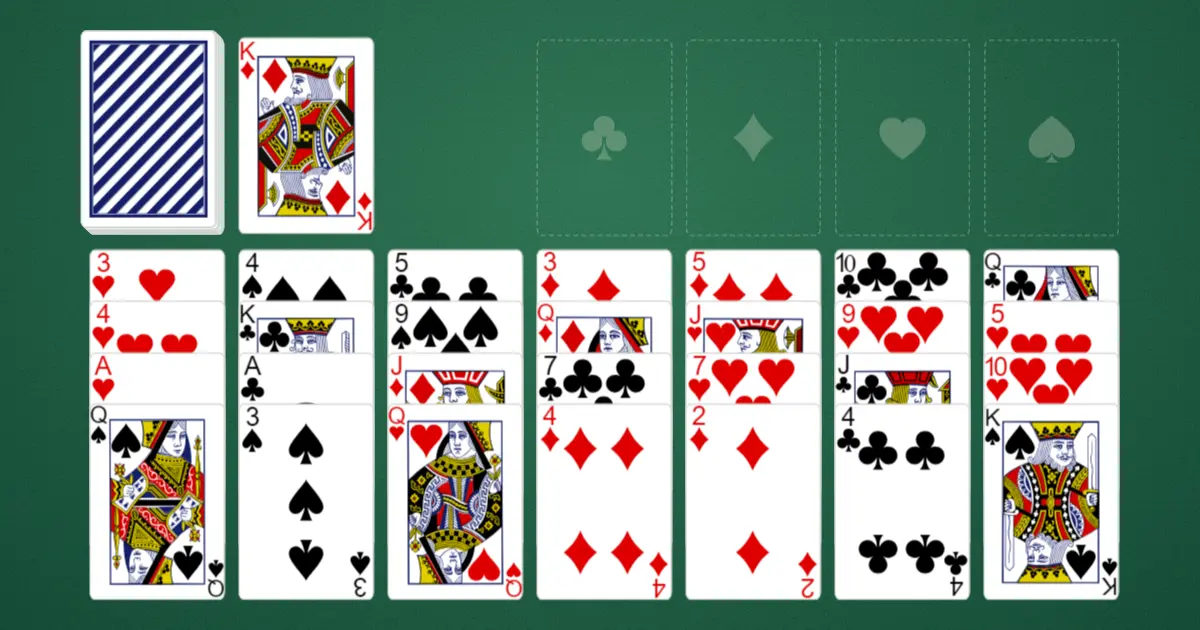
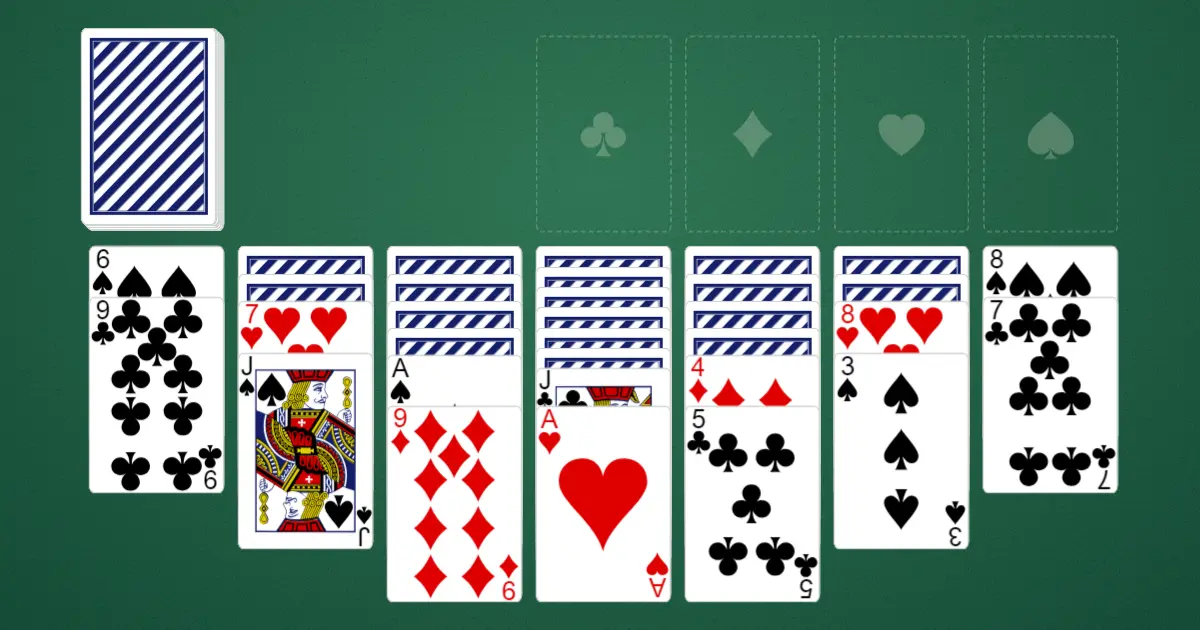
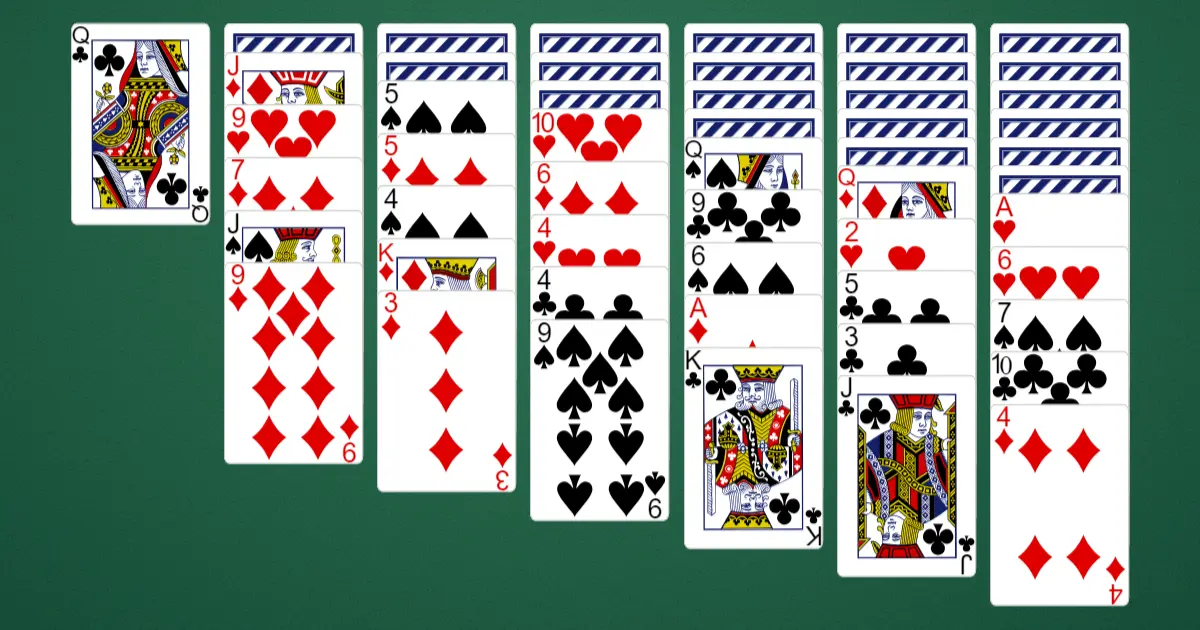
Spider deals 104 cards into ten piles that are cleared in runs of one suit from King down to Ace; Spider Two Suits and Spider One Suit play it with two suits and with one. Black Widow, Mrs. Mop, Will o' the Wisp, Grounds for a Divorce and Tabby Cat change its moves or its deal, and in Wasp, Scorpion Tail, Scorpion Head and Three Blind Mice any face-up card moves with every card lying on it.
-
Spider
104 cards dealt into ten piles and cleared in runs of one suit from King down to Ace.
-
Spider Two Suits
Spider dealt from spades and hearts only, four of each card.
-
Spider One Suit
Spider dealt from spades alone, eight of each card.
-
Black Widow
Spider where a run in any suits moves together, though only a run of one suit leaves the table.
-
Mrs. Mop
Spider with all 104 cards dealt face up into thirteen piles and no stock.
-
Will o' the Wisp
Spider with one deck dealt into seven piles, two cards face down under one face up.
-
Grounds for a Divorce
Spider with 50 cards dealt face up and a stock that deals even with piles empty.
-
Wasp
One deck in seven piles built down in suit, where any face-up card moves with every card lying on it.
-
Scorpion Tail
Wasp built down in alternating colours, with only a King filling an empty pile.
-
Scorpion Head
One deck in seven piles built down in suit, with four empty cells and no stock.
-
Three Blind Mice
One deck in ten piles built down in suit, with two cards dealt into cells that can only be played out.
-
Tabby Cat
One deck dealt a card to each of four piles, built down regardless of suit with a King on an Ace, and a tail that holds one run.
About these games
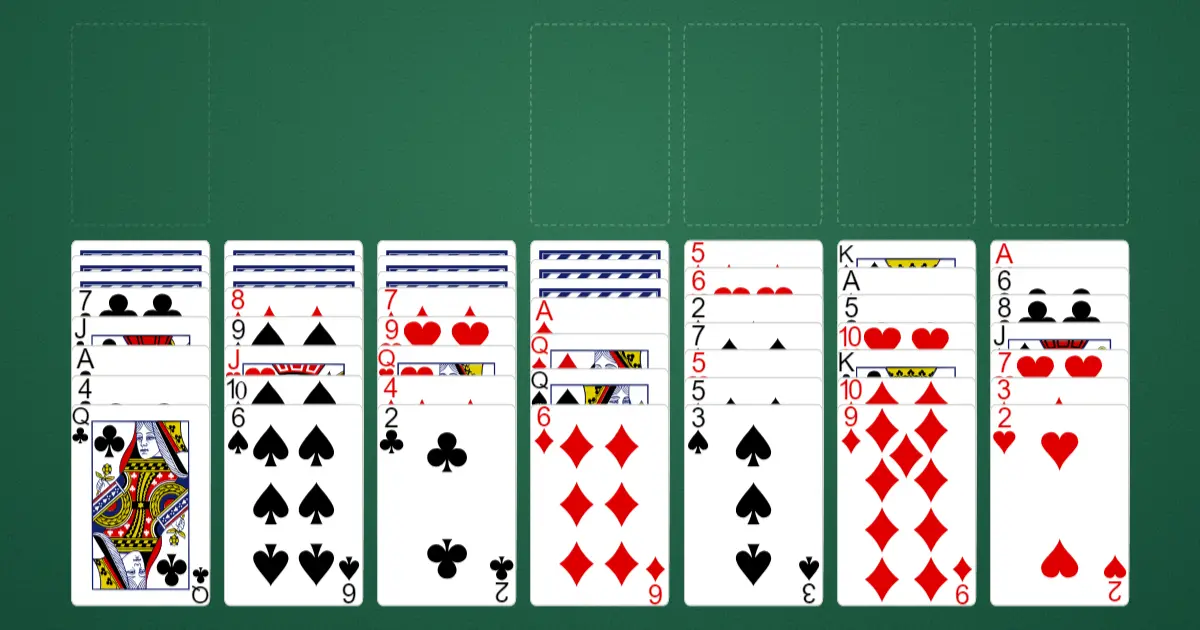
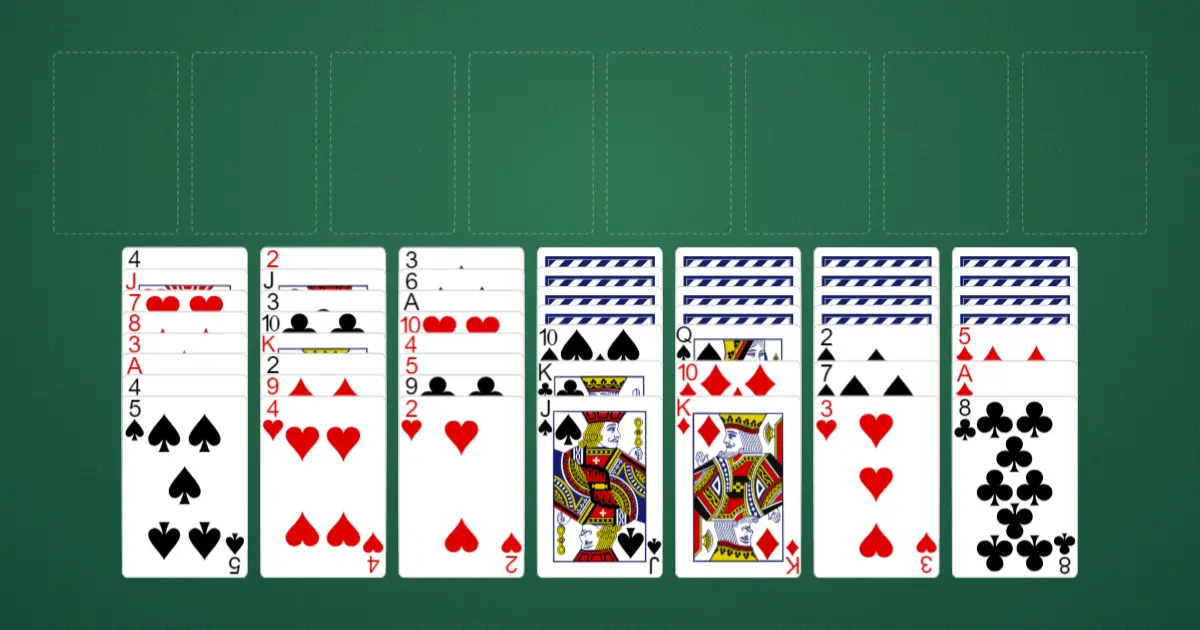
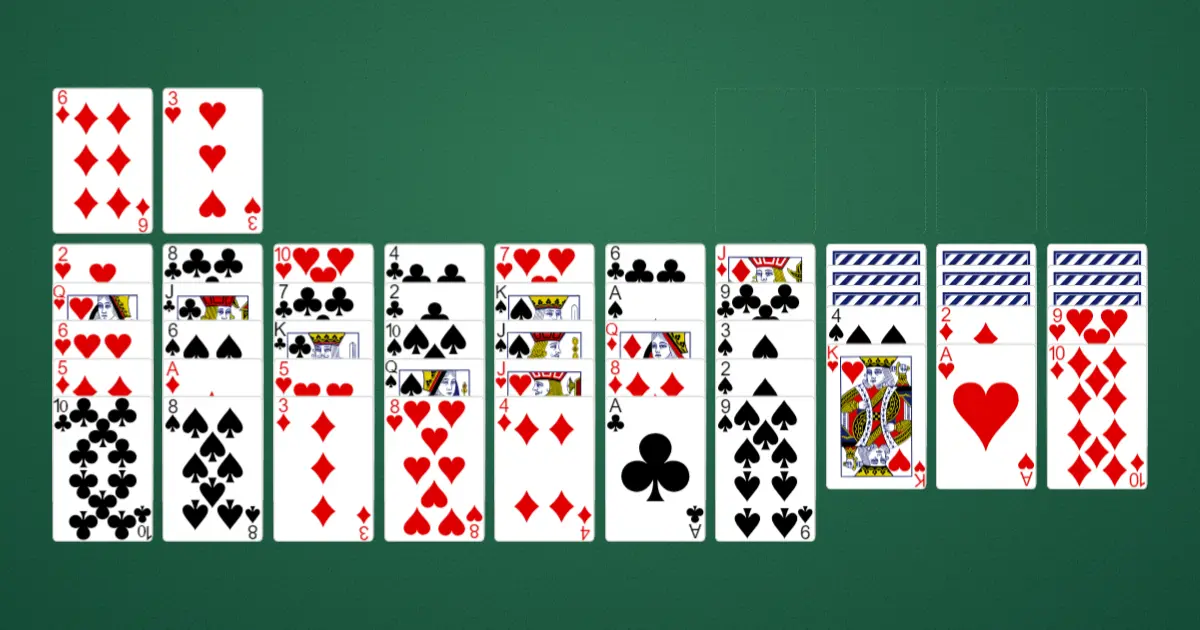
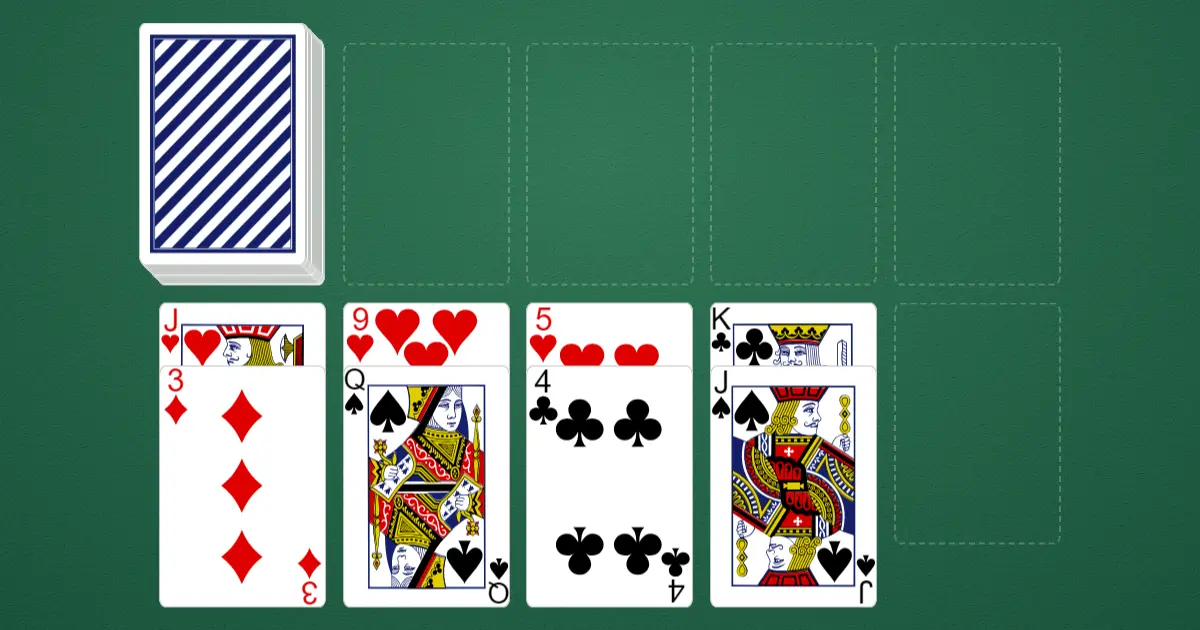
The games differ most in how much you can see. FreeCell and games like it, such as Beleaguered Castle and Bisley, deal every card face up, so you can plan a deal from the first move. Klondike starts with most of the tableau face down, and turning those cards over is half the game. Spider and Yukon also deal cards face down under each pile, while Forty Thieves deals its piles face up and keeps the rest of its two decks in the stock. Calculation and Sir Tommy show only the next card of the stock, and the skill lies in where you park it, since the stock is played through once.
If you are new to solitaire, start with Klondike, turning one card at a time, then try Draw Three. Las Vegas Solitaire deals the same game with a single pass through the stock, which makes it much harder to win. Aces Up and Pyramid have the shortest rules and the quickest deals. Calculation and Sir Tommy reward careful planning, because a card parked in the wrong place can stay buried; Sir Tommy, where every foundation climbs from Ace to King, is the easier of the two to follow. Among the games dealt face up, FreeCell gives you the most room, with four free cells and runs that move in one go, while Fortress, Baker's Dozen and Bisley move only one card at a time. Spider One Suit is the gentlest way into the two-deck games, since every run it builds can be moved.
Not every shuffled deal can be won, so most of these games have a Winnable switch in the menu beside New deal. Klondike, FreeCell, Canfield and their relatives then keep shuffling until the solver proves a board can be won, and deal an ordinary shuffle only if they run out of tries. Aces and Kings and the Forty Thieves, Yukon and Spider games deal from a list of boards the solver has already proved can be won. Chameleon, Four Seasons, Czarina, Roosevelt, Double Rail, Australian Patience, Yukon Kings and Las Vegas Solitaire have no such switch. Every game is free in your browser without an account, and signing in adds a daily board for every game but the two Las Vegas ones, the same deal for everyone that day. Solitaire is played alone, so there are no online tables.